Authorial · Architectural Concept · 2024–ongoing
Museum of Diversity Jamaica
Overview
Following the success of the Commonwealth VR museum, I was commissioned to design the actual physical building in Jamaica — a permanent institution dedicated to Black and diaspora histories through immersive technology. Having built them a digital home, I was then asked to design the real one.
Project Context
The Museum of Diversity Jamaica (internal code name: Amaterra) is a permanent institution dedicated to Black and diaspora histories through immersive technology — Jamaica’s first of its kind. I served as sole conceptual designer. All research, design development, Revit and Rhino modeling, CAD drawings, 3D renderings, and schematic walkthroughs are my original work.
What Was at Stake
Jamaica’s first people, the Taíno, were nearly completely erased through colonization. Their culture, symbols, and knowledge systems were systematically destroyed. A museum dedicated to Black and diaspora histories that ignored the indigenous people who were there first would be quietly repeating that erasure — even with the best intentions.
Getting this wrong would not be merely a design mistake. It would be a political and moral one, embedded permanently in the building’s structure.
Structural Complexity
Fragmented history. Taíno history has no complete, continuous record. Designing from incomplete history without distorting, romanticizing, or appropriating it required careful and sustained research judgment across every decision.
Institutional values made spatial. The building had to operationalize MoD’s five core values — Duty, Inclusion, Vision, Equity, Respect — and make those values spatially legible, not just stated on a wall.
Future-proof flexibility. The building needed to function as both a traditional museum and a flexible media environment capable of evolving as technology changes — structure that doesn’t require renovation when the storytelling tools do.
Political grounding. Choosing the Taíno as the conceptual foundation is a deliberate statement: this museum begins before slavery, before colonization. That is a repositioning of where Black diaspora history starts, and it carries weight.
Specific Decisions I Made
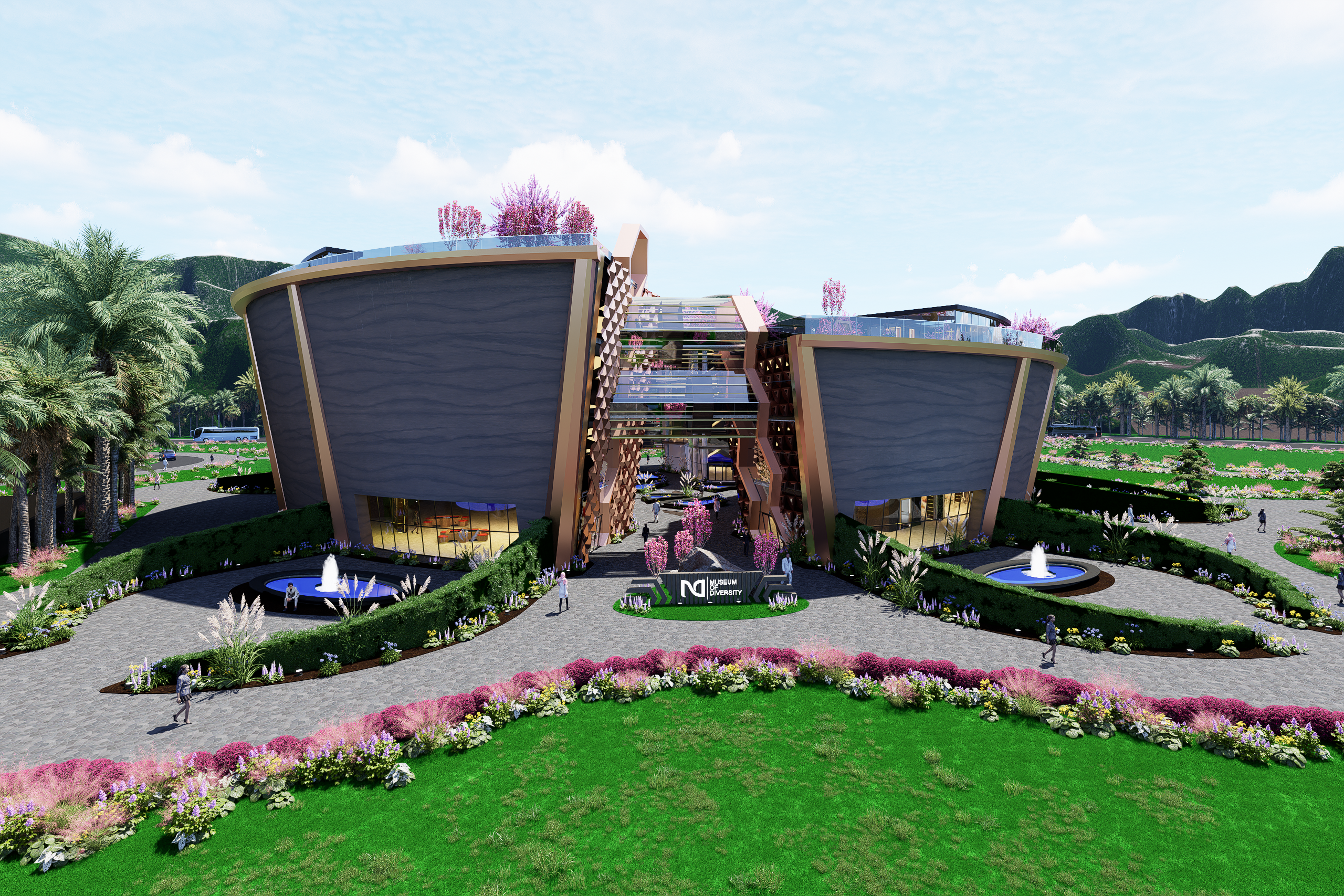
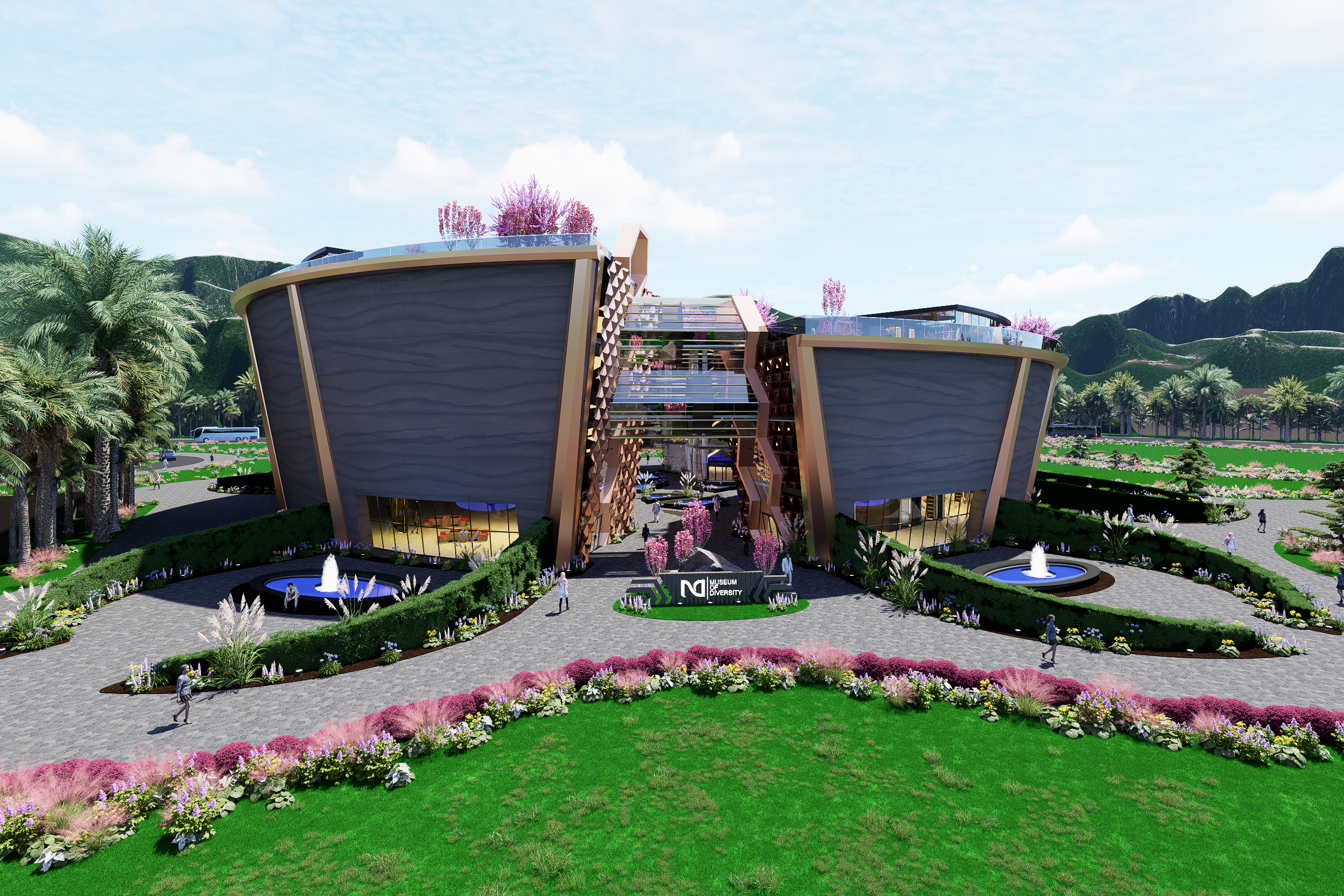
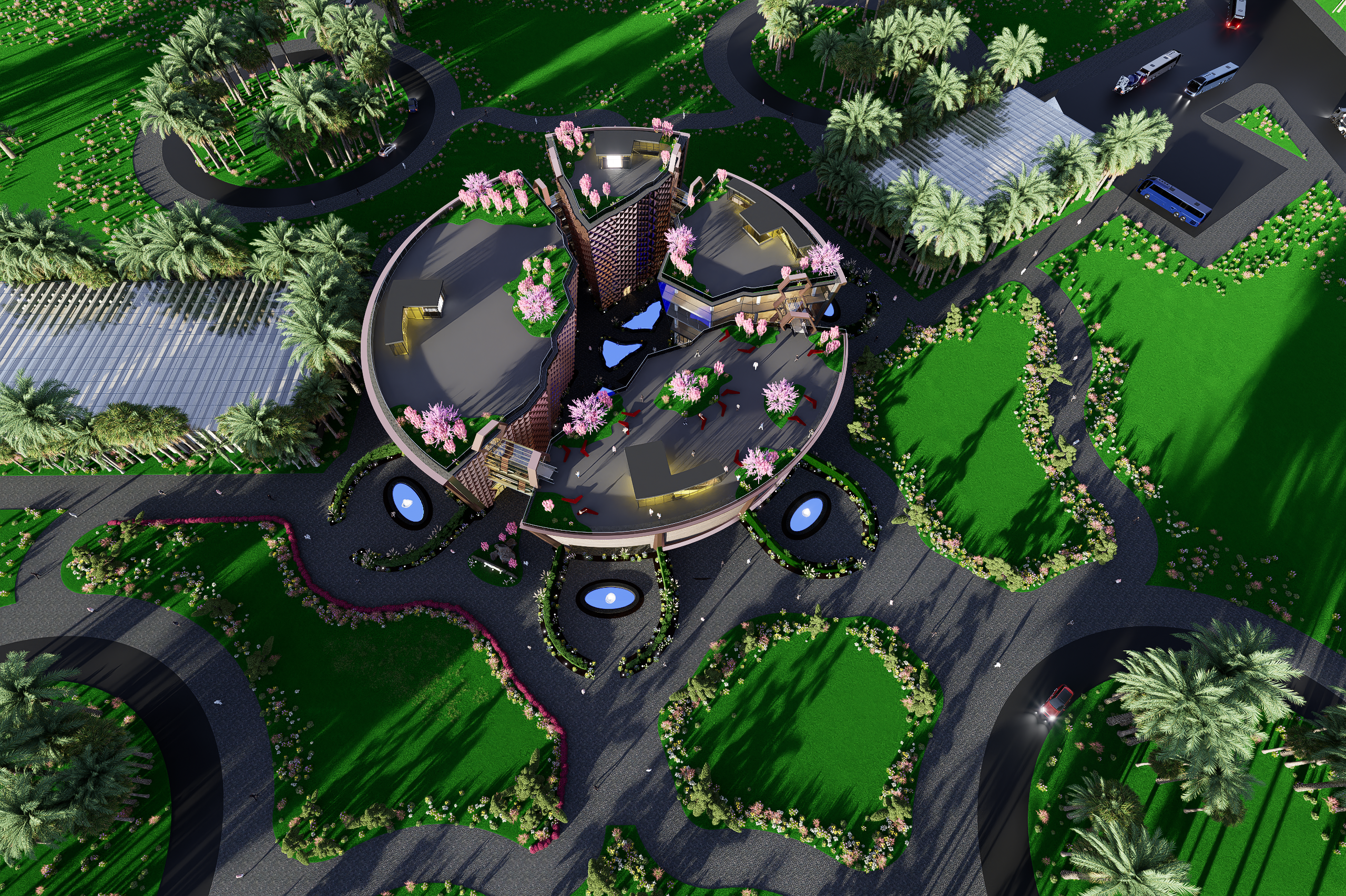
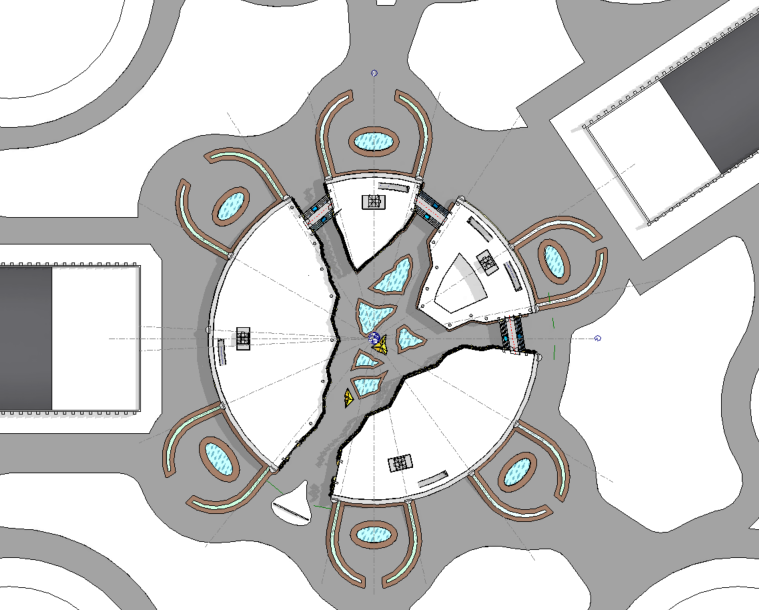
I chose the broken Taíno sun — not a whole, perfect sun, but a fractured one — as the organizing symbol. A broken symbol used honestly is more truthful than a pristine one. The histories this museum holds are also fragmented. The form had to say that directly.
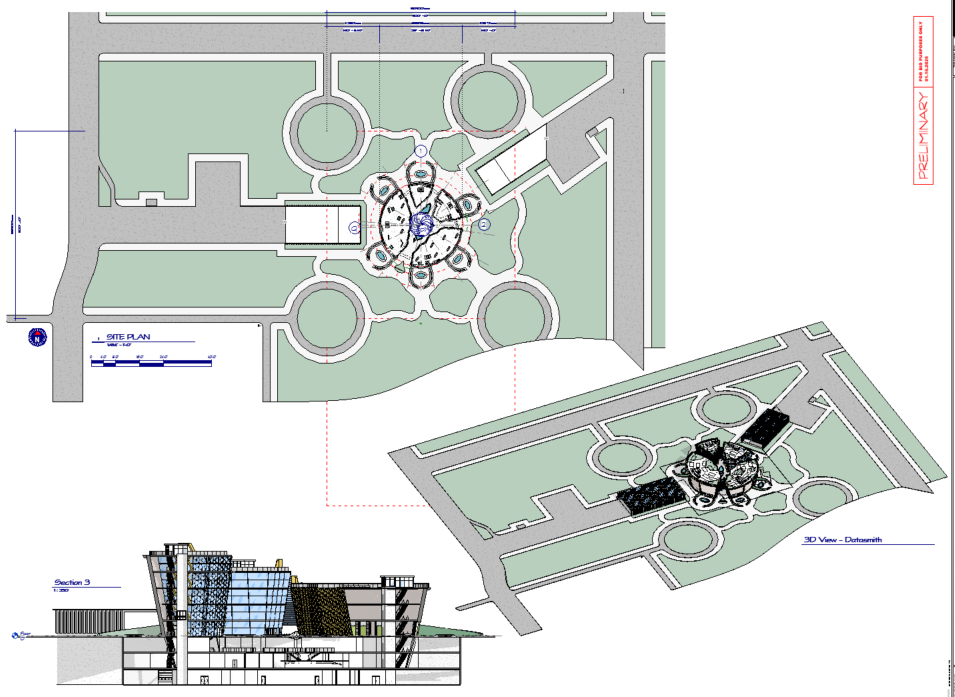
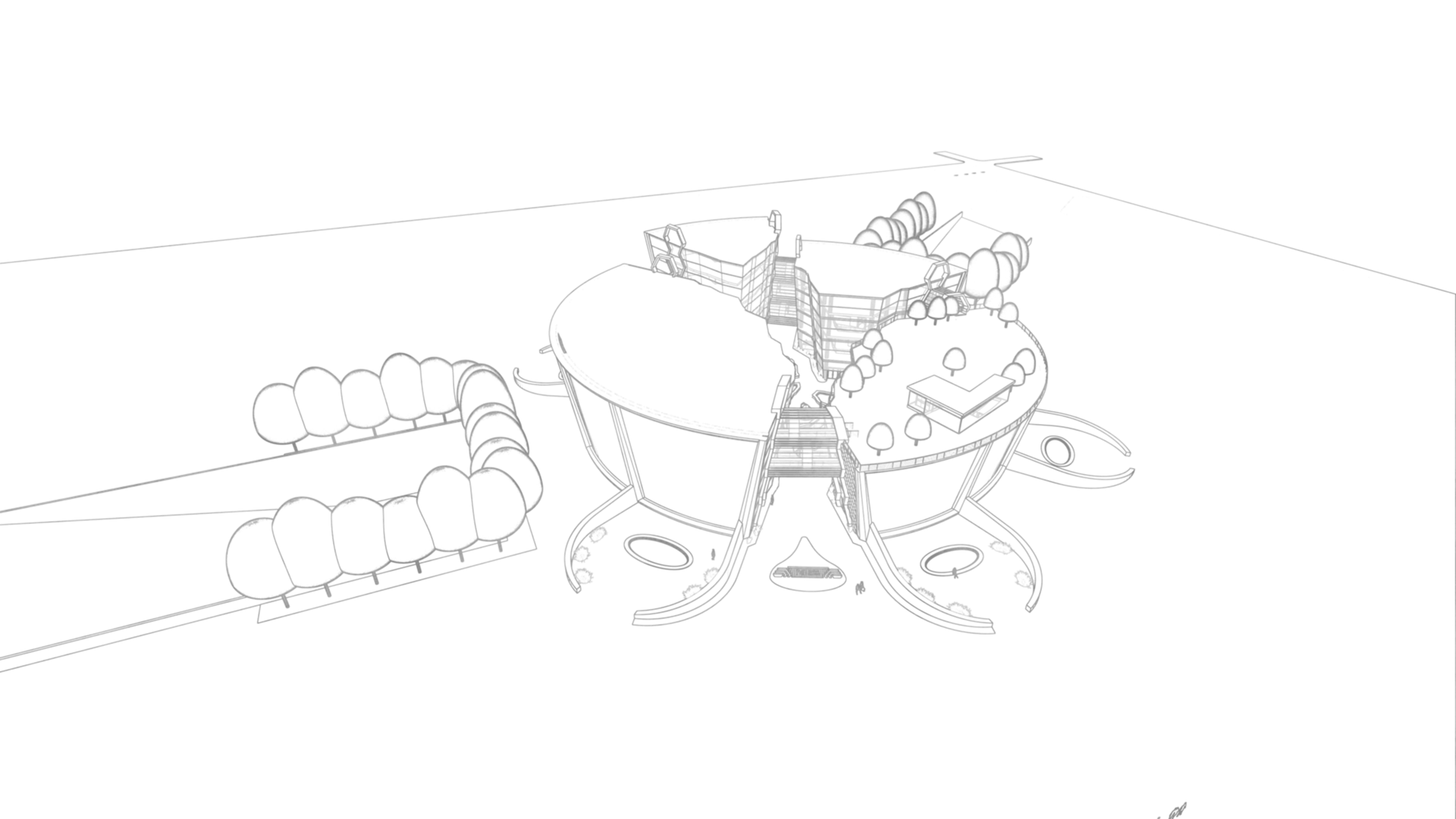
I used the fragments of the sun as the literal architectural floor plan. Each fragment becomes a distinct programmatic zone: Dialogue Rooms, Equity Labs, archive spaces, future labs. The geometry is not decorative — it generates the building’s entire organizational logic.
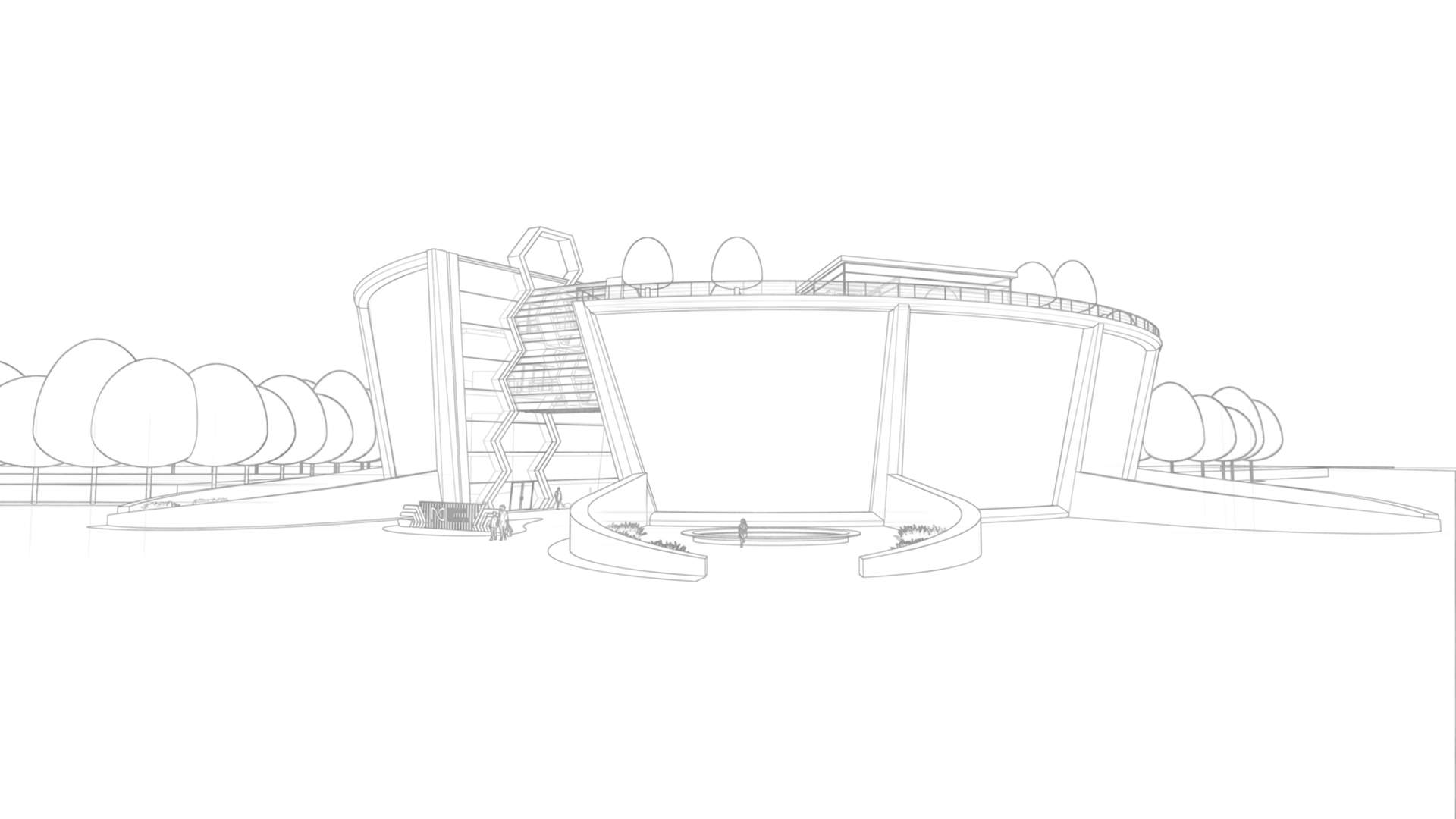
I made the gaps between fragments intentional. The voids between sun pieces become courtyards, light wells, and transition zones. Visitors physically move through absence as well as presence. The empty space represents what was lost — and holds it honestly rather than papering over it.
I designed all gallery volumes as flexible black-box spaces with no fixed technology built in, so the museum can upgrade its storytelling tools as technology evolves without requiring structural renovation.
I rejected a pan-African aesthetic using kente patterns or Adinkra symbols because this would center West African heritage over Caribbean and indigenous histories specifically — a form of erasure in its own right. I also rejected representing Taíno culture decoratively through murals and surface motifs. I made the cultural commitment load-bearing. Decoration is easy to remove. Structure is the argument.
My Judgment
Fragmented histories are not shameful gaps to be hidden or filled in with guesswork. They are the actual material of the work. The design had to make that legible spatially — so visitors feel the incompleteness as meaningful, not as failure or oversight.
Indigenous knowledge systems and immersive digital technology are not opposing forces. They are both methods of preserving and transmitting what matters across time. My design proves that a museum of the future does not have to forget the deep past to face forward.
Challenge
Taíno history is fragmented — there is no complete, continuous record. Designing from incomplete history without distorting or romanticizing what remains required research judgment at every decision point, not just at the concept stage.
Approach
I moved to ecology and geometry — visual language that predates colonial borders — finding forms that could carry cultural honesty without reduction. The broken Taíno sun became both the symbol and the literal floor plan. Architecture as argument, not decoration.
Outcome
A culturally rooted, architecturally defensible institution in development — one whose origin story begins before colonization, which is itself an act of historical restoration embedded in the building's structure.
Fragmented histories are not shameful gaps to be hidden. They are the actual material of the work.
Yolande Thame · on Museum of Diversity, Jamaica
Production Gallery

All studio-owned imagery displayed with full production house credit for professional portfolio purposes. Set drawings and technical documents are original work by Yolande Thame.
Impact
The conceptual framework gives MoD a culturally rooted, architecturally defensible foundation for a building currently in development. By anchoring the design in the Taíno — Jamaica’s first people — the museum’s origin story begins before colonization, which is itself an act of historical restoration embedded in the architecture.
The design directly supports MoD’s fundraising efforts: the concept provides both a compelling visual identity and a principled cultural argument for institutional investment. The building can function simultaneously as a sanctuary for dignity and a platform for celebration because the geometry allows for tonal gradation — moving from solemn archive spaces through vibrant communal gathering areas to speculative, forward-looking installations.
This commission followed directly from the success of the Commonwealth VR virtual museum, validating MoD’s capacity to deliver complex, politically significant cultural work at institutional scale.
Next step