Makeshift: A Filmmaking Journey with Coca-Cola Refreshing Filmmaker Award Finalists
Do you remember when you stumbled upon something truly extraordinary, something that felt like a blast from the past? Well, we’re about to take you on a nostalgic trip back to a remarkable moment in our filmmaking journey during our time at the Savannah College of Art & Design.
It all began when our film, “Makeshift,” a Coca-Cola Refreshing Filmmaker Award Finalist, was still just a concept brimming with creativity and youthful enthusiasm. Our team, comprised of talented individuals who shared a passion for storytelling, embarked on a mission to bring this project to life.
The Plot Unveiled
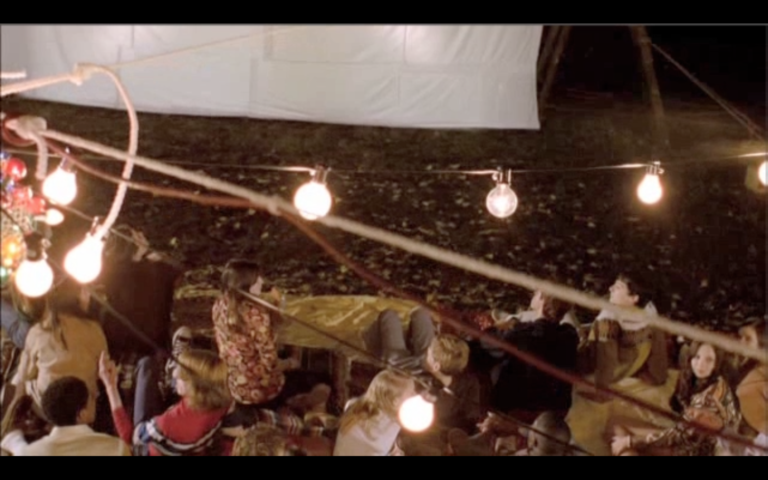
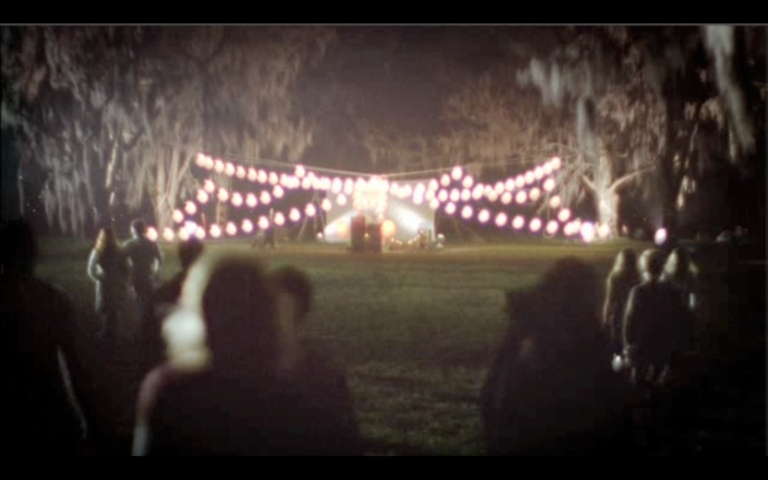
The heart of our commercial revolves around a young man who stumbles upon a group of friends in an open field. Seizing the opportunity to spread joy and excitement, he transforms this simple field into a magical pop-up movie screening. Picture this: a makeshift concession stand, a movie screen, and an old-school film camera all coming together under the summer sky. It’s a story that captures the essence of youthful spontaneity and the joy of creating memorable experiences with friends.
https://vimeo.com/29897996
Behind the Scenes
Every great film requires a dedicated crew, and ours was no exception:
Broody Carmikell – Director: The visionary behind the camera, Broody brought our story to life with his exceptional directing skills, ensuring that every frame was infused with the magic of the moment.
Zach Graber – Director of Photography: With an eye for capturing the perfect shot, Zach skillfully crafted the visual narrative, ensuring the essence of summer and camaraderie shone through.
Joshua Green – Production Designer: Joshua was instrumental in setting the stage for our pop-up movie experience, meticulously designing the set to evoke nostalgia and wonder.
Yolande Thame – Set Dresser: As the set dresser, Yolande added the final touches that made our creation feel inspirational and relatable. Her attention to detail breathed life into our project.
Creating Magic on Set
Dressing the set was a task that brought us immense joy. We wanted our audience to feel the nostalgia and excitement that the characters on screen were experiencing. From the retro concession stand filled with iconic Coca-Cola bottles to the warm, inviting glow of the makeshift movie screen, every element was carefully chosen to create a sense of wonder.
Conclusion
Our film, “Makeshift,” a Coca-Cola Refreshing Filmmaker Award Finalist, was not just a project; it was a journey filled with passion, creativity, and the joy of filmmaking. It reminds us of the power of spontaneity, the importance of creating unforgettable moments, and the magic that happens when a group of talented individuals comes together to tell a story.
So, as you sip on your Coca-Cola and reminisce about those timeless moments, remember that “Makeshift” captures the magic of the past and brings it to life on the silver screen. Cheers to the power of storytelling and the memories that last a lifetime!
My First Directorial Debut: A Student’s Journey into Filmmaking
Stepping into the director’s chair for the first time is akin to embarking on an exhilarating rollercoaster ride. As a graduate student pursuing my master’s in fine art at the Savannah College of Art and Design, this experience was a pivotal moment in my filmmaking journey.
https://vimeo.com/34744191
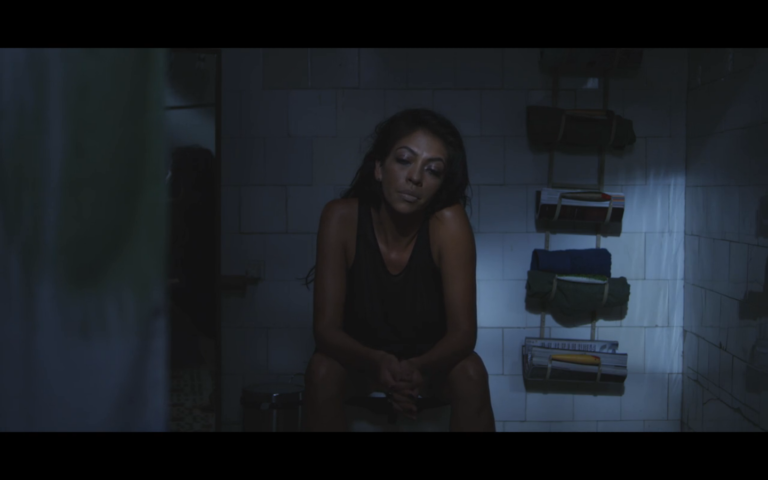
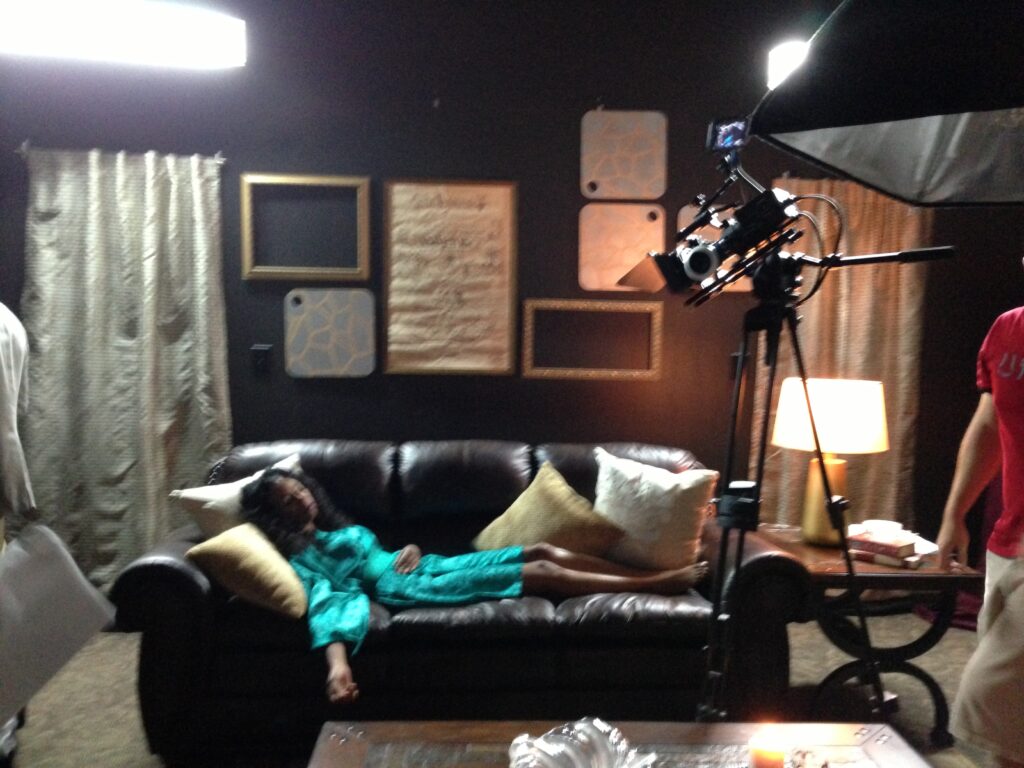
The project revolved around a quirky exotic dancer psyching herself for a peculiar and enigmatic night’s work. This narrative, filled with intrigue and character complexity, excited my creative spirit. Collaborating closely with my talented cinematographer, Catalina Alcaraz-Guzman, we embarked on translating our vision onto the screen.
One of the most challenging aspects was getting the lighting right inside the car: the confined space and the need to create a specific mood added complexity to the task. Every shadow, every beam of light, was a brushstroke on our cinematic canvas. It was in these moments of trial and error that I discovered the true artistry of filmmaking, where precision meets creativity.
Reflecting on this experience, I pondered what I might do differently if I had the opportunity to revisit that director’s chair. I realized I would embrace a faster pacing, injecting a sense of urgency into the narrative. The world would be a bit “grimier,” capturing the raw and unfiltered essence of the story.
This first directorial debut was a whirlwind of discovery and growth. It taught me that the director’s chair is not just a seat; it’s a realm of endless possibilities where storytelling and artistry converge. It’s a journey I eagerly continue as I navigate the exciting world of filmmaking and uncover new layers of creativity with each project.
Art Directing in the Vibrant Streets of Medellín, Colombia
Stepping off the plane in Medellín, Colombia, I was greeted by the warm and colorful embrace of a city that instantly reminded me of my Caribbean homeland, Jamaica. It was a new adventure, a chance to collaborate with a talented film crew in a place known for its stunning landscapes and vibrant culture.
Language proved to be a small barrier, as I was one of the few on the set who didn’t speak Spanish. Yet, the crew’s kindness and willingness to help me navigate the language divide made the experience even more enjoyable. Their shared passion for filmmaking transcended words.
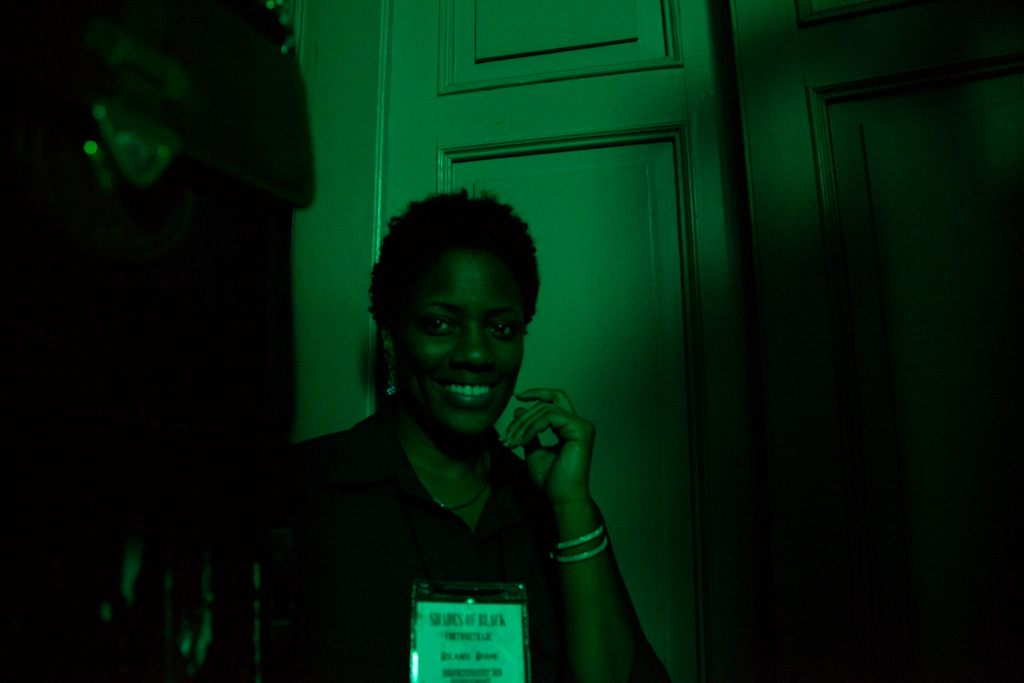
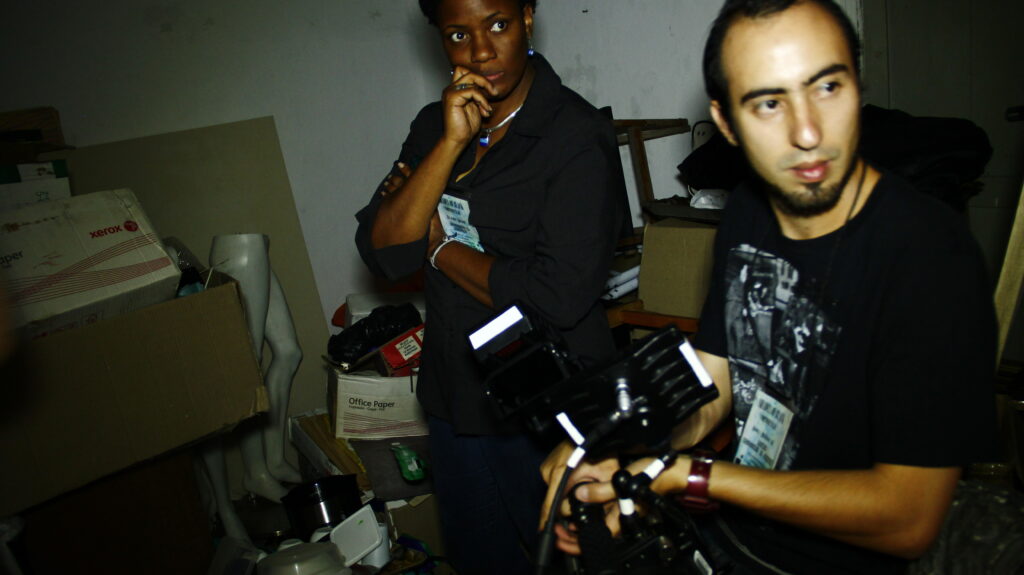
The Fabulous CrewFlim LocationThe Required PowerMy life-saving Art Direction CrewDirector & Supporting ActressSneaky photo of meCatalina (our director) being the dynamic woman she is..Another rare sighting listening me to our Professor, Bear BrownDirector make sure we are on trackI don’t remember this photo at allMy face says things were getting serious but really we had the best time.
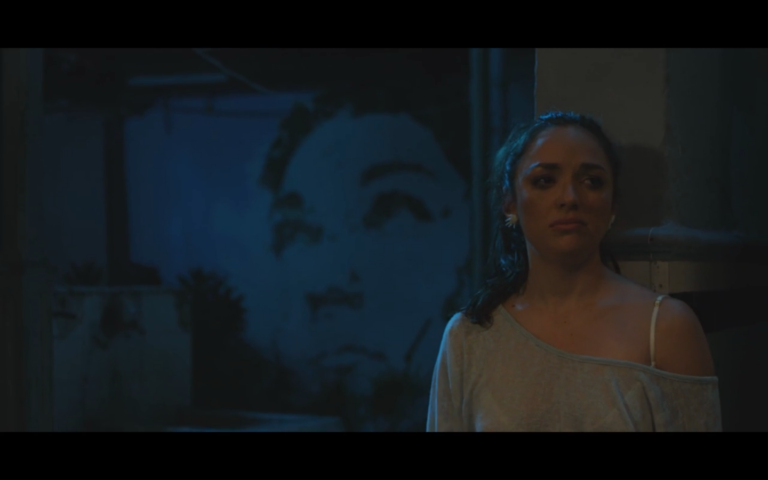
Our project was the brainchild of a brilliant director, Catalina Alcaraz-Guzman. The film, “Shades of Black,” explores the emotional journeys of two women at different stages of their careers in the world of performing arts. One was a jaded veteran, while the other was beginning her artistic voyage.
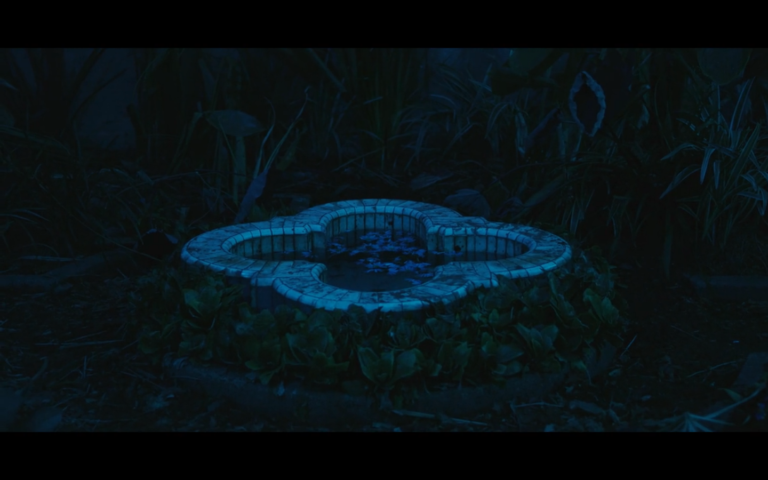
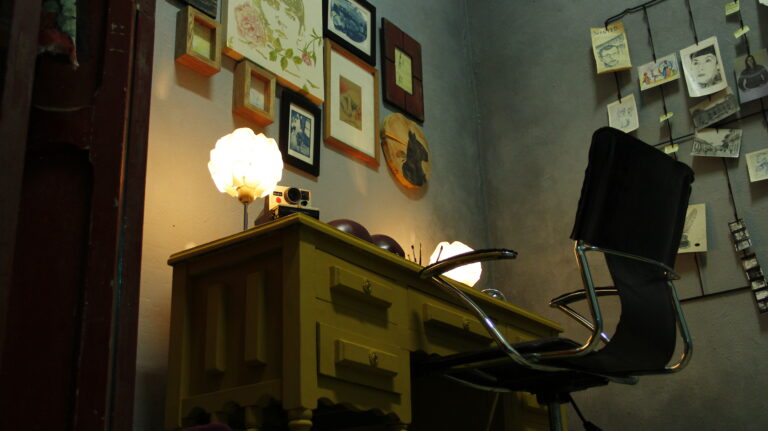
My role as the production designer was to create environments that would support the storytelling. I designed a moody kitchen where most pivotal dialogues took place, a bedroom where the narrative unfolded, and two contemplative courtyards where both characters grappled with the unspoken.
The beauty of Medellín seeped into our frames, enriching the visual narrative. The vibrant colors, picturesque streets, and photogenic settings served as a wellspring of inspiration for our artistic vision.
“Shades of Black” is a story that delves into the emotional depths of its characters. One has become disillusioned, wrapped in her self-indulgence, and captivated by worldly pleasures. The other is on a quest to shed her innocence and find her place in a world where art and life are intertwined.
As the days passed, I immersed myself in the story, intricately crafting each scene to support the characters’ emotional arcs. It was a crash course in resourcefulness and creativity, an experience that demanded making things work even with limited resources.
Medellín became a character in the film, its charming streets and scenic landscapes adding depth to the story. The city’s energy and spirit resonated with our narrative, amplifying the emotions of our characters.
Working in Medellín was not just a professional endeavor but also a personal journey. It reminded me of the beauty of my Caribbean home, the warmth of its people, and the power of storytelling that transcends language.
“Shades of Black” was more than just a film project; it was an exploration of the human experience, a journey of self-discovery and transformation. And Medellín, with its vibrant colors and photogenic sites, played a crucial role in bringing that story to life.
Ultimately, it was not just a film, but a testament to the universal language of art, one that transcends borders, cultures, and languages.
Shades of Black is a window into the emotional state of two women. One has become cold-hearted, wrapped in herself and the pleasures of the world. The other struggles to shed her innocence and yearning to be found.
Crew:
Catalina Alcaraz-Guzman – Director
Marcel Morschhauser – Director of Photography
Yolande Thame – Production Designer
Digital White Models in Film: Bridging Creative Vision and Practical Execution
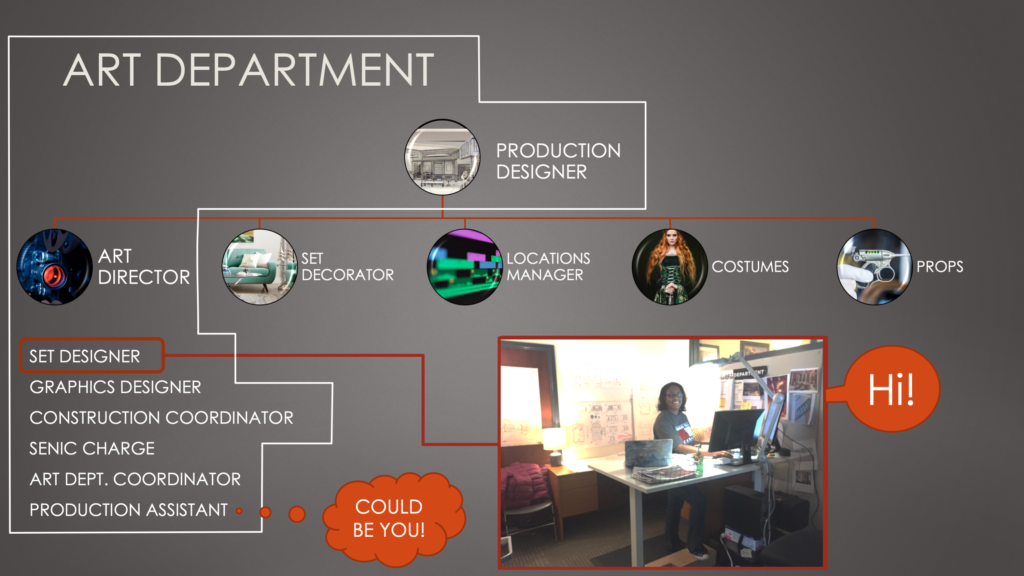
The art department’s role in filmmaking often remains behind the scenes, quietly shaping the visual narrative. While the director, cinematographer, and production designer get the limelight, set designers and art directors play a crucial role in bringing a script to life.
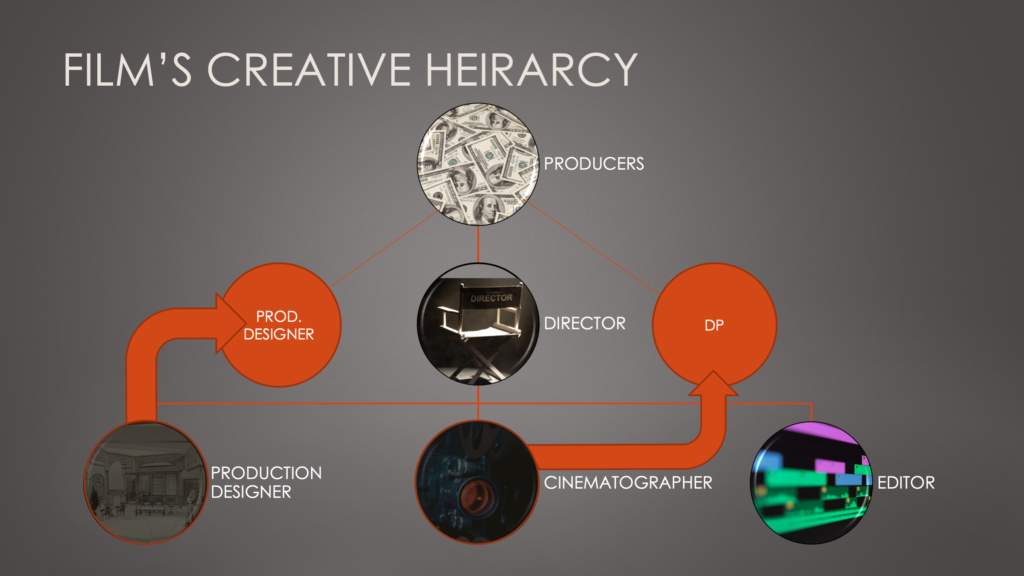
In a typical film production hierarchy, the director sets the vision, casts the actors, and hires department heads. The director of photography (DP) takes charge of the camera and lighting, while the production designer (PD) oversees the art department. The PD is not just an artist; they’re the logistical head, steering the ship of creative departments like costume design, location management, prop management, and set decoration.
Within the art department, the production designer’s right-hand person is the art director, who is responsible for managing set and graphic designers, as well as the scenic and construction departments. Their collaboration ensures the sets are not just visually stunning but also functionally sound for filming.
Set designers, in turn, bridge the gap between the production designer’s vision and the practical needs of construction and scenic departments. They create drawings and models that guide the construction and painting of sets. This process has evolved significantly with the advent of technology. The software allows set designers to develop 3D models alongside technical drawings in real time, streamlining the collaborative effort.
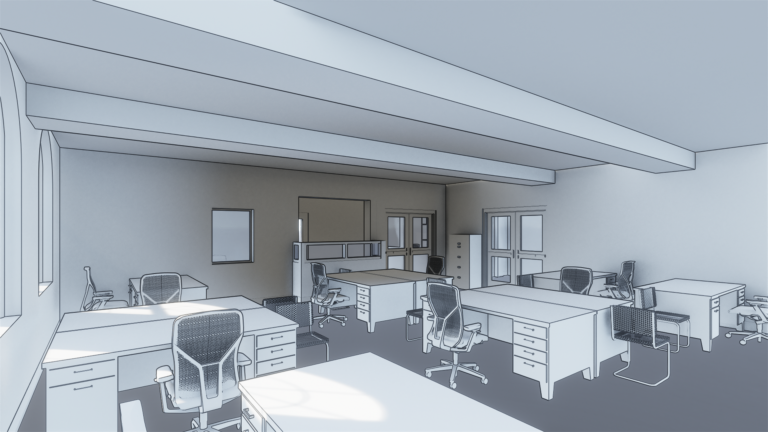
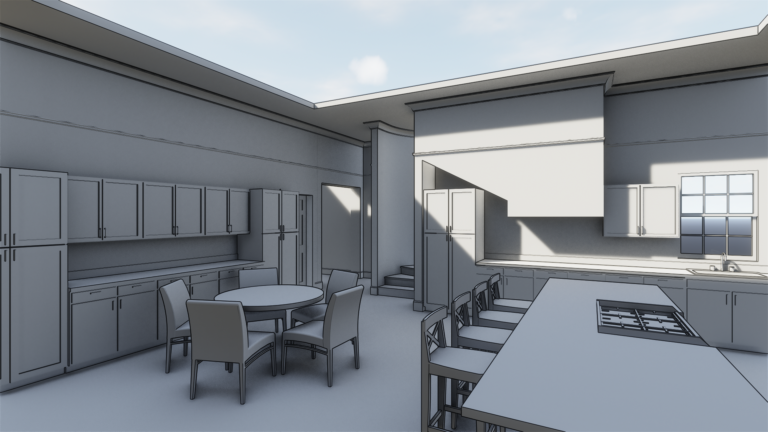
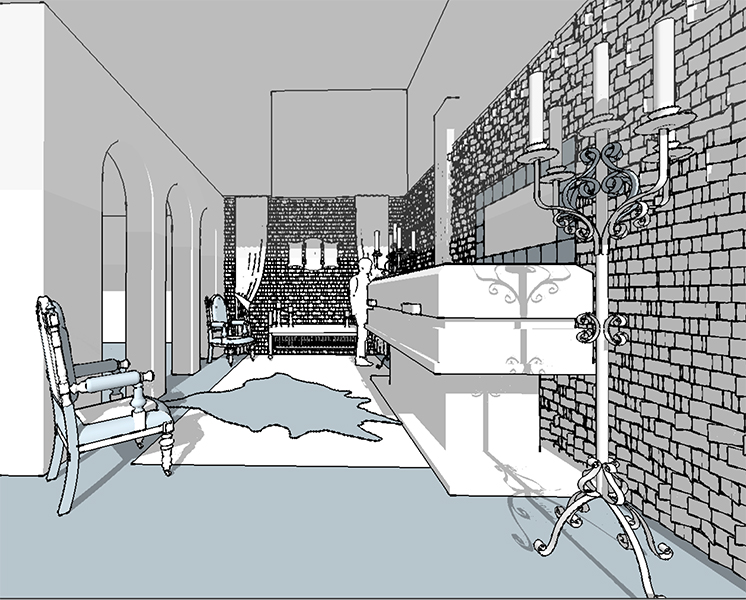
One technique embraced by set designers is the use of digital white models. These models are inspired by traditional foam-core architecture models, which are still used for complex or stunt-heavy environments. Digital white models serve a specific purpose – they focus on form over color or texture. During pre-production, this clarity helps integrate input from various team members without constraining their creativity.
In the world of filmmaking, where every detail matters, digital white models offer an efficient way to communicate the spatial design without getting bogged down in intricate details. They serve as a canvas upon which the collaborative team can paint the nuances of storytelling.
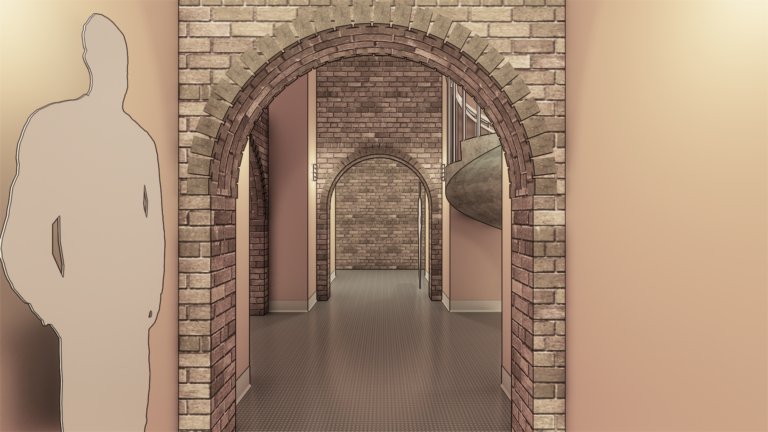
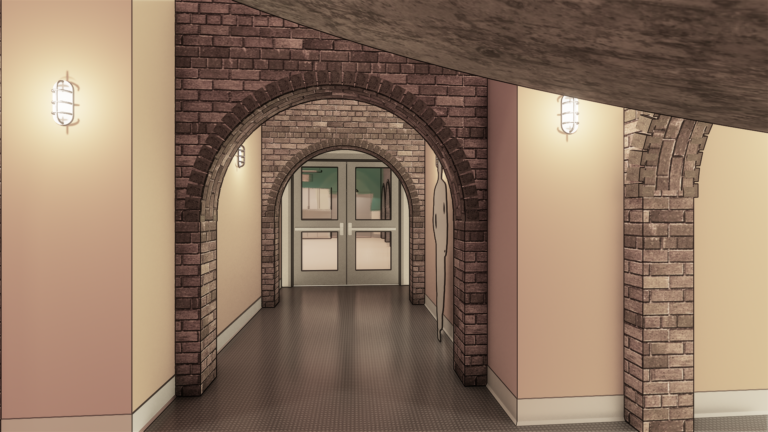
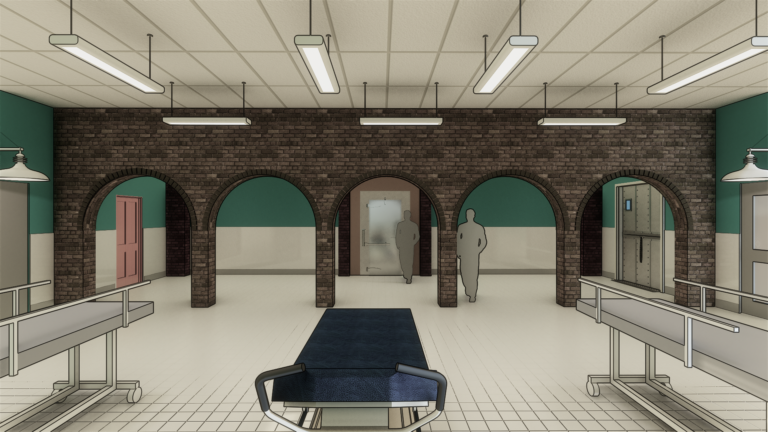
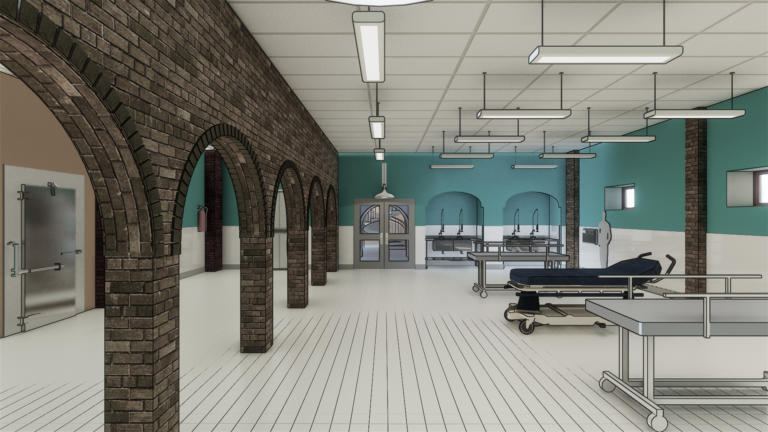
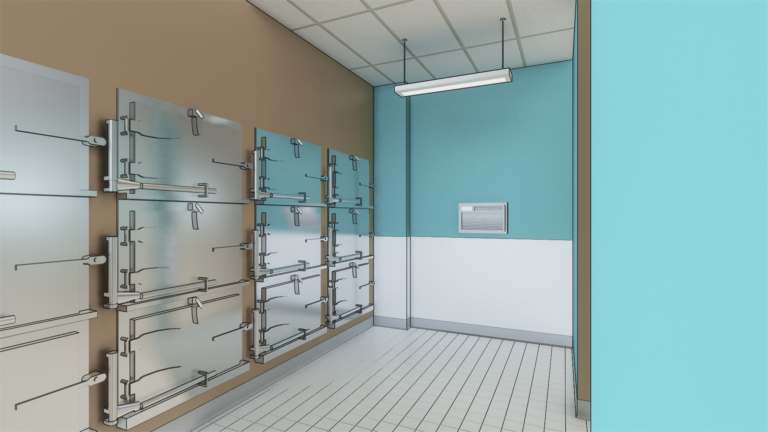
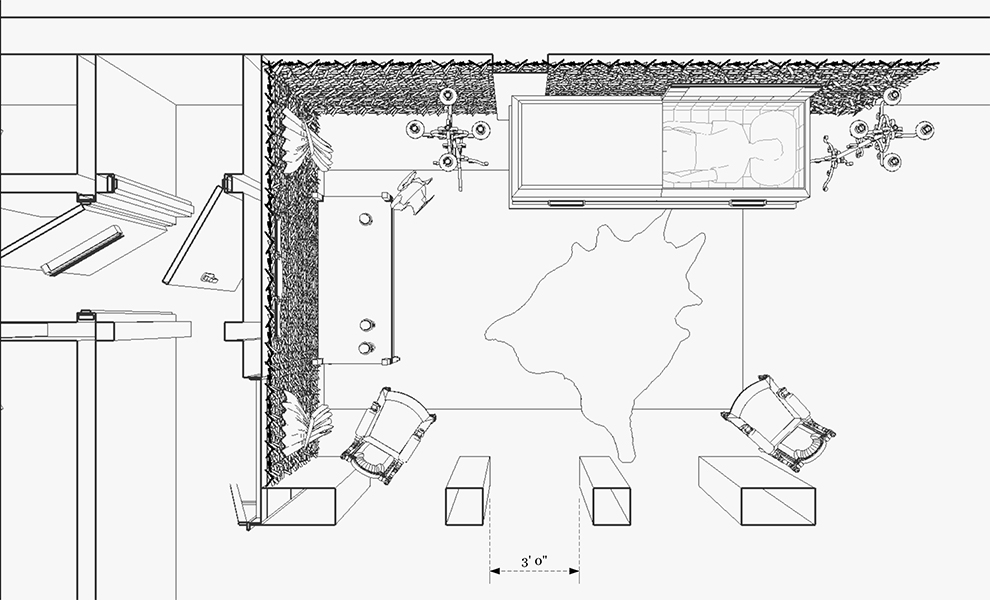
For example, I’d like to share insights from a canceled pilot titled “Superstitions.” In this project, I utilized digital white models for studying sets such as a funeral home and morgue. These models provided a foundation for discussions with various stakeholders, facilitating a shared understanding of the space’s layout and potential. They allowed us to explore the form, consider practical functions, and leave room for creative interpretation.
While the art department’s work often remains unseen in the final film, it’s a testament to the collaborative nature of filmmaking. The hierarchy, from directors to set designers, is a complex structure where each role is integral in turning a script into a cinematic masterpiece.
In the end, the magic of filmmaking lies in the harmonious fusion of creative vision, practical execution, and the relentless pursuit of storytelling excellence.
Crafting the Spaceship: My Journey in Design for “Phoenix Beyond”
As I embarked on my master’s program at the Savannah College of Art and Design, I never anticipated the incredible journey that awaited me. It was during this time that I had the opportunity to contribute to a remarkable project – the creation of a spaceship for the short film “Phoenix Beyond.”
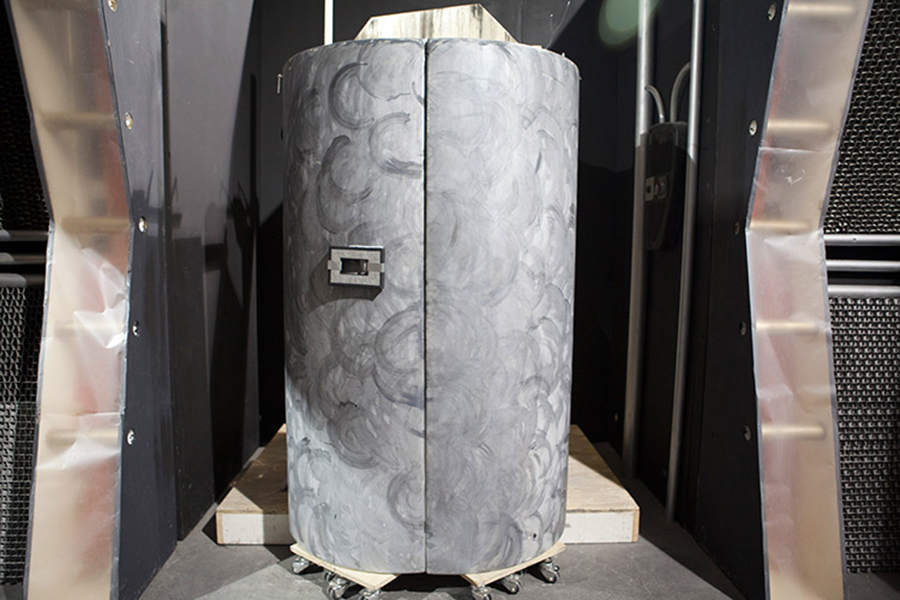
The film’s storyline, directed by Neil Short, revolves around a young man trapped in a monotonous daily routine within the confines of a spaceship. His mundane existence is disrupted when a fellow shipmate lures him outside, revealing the shocking truth: their spaceship is, in reality, an observation pod housed within a warehouse. The project was a testament to the transformative power of film and the art of set design.
Creating the spaceship itself was a monumental task that took an entire month and a dedicated team of students. We were faced with the challenge of bringing a futuristic and enigmatic environment to life. The design was influenced by the intricate structure of a hexagonal hive, creating a visually captivating yet eerie aesthetic. To add an extra layer of suspense, we incorporated a sickly green tint, subtly hinting to the audience that something was amiss.
What I quickly learned through this experience was the critical difference between designing for film and theater. In the realm of film, every detail is meticulously examined, as the camera captures even the smallest nuances. Scenic techniques that might work seamlessly on a theater stage can be far less forgiving when a camera lens is involved, making precision and attention to detail paramount.
The process was not without its challenges, from scaling the 30-foot ladders to address every minute detail, to navigating the complexities of film production, which often meant working long hours with little sleep. It was a journey that tested my limits but also solidified my passion for design.
“Phoenix Beyond” was not just a film; it was a testament to the power of storytelling through visual elements. It was a journey of creative discovery and collaboration, a testament to the dedicated individuals who poured their talent and hard work into bringing this science fiction tale to life.
Reflecting on my experience with “Phoenix Beyond,” I am reminded that creativity knows no bounds and that the pursuit of design can lead to revelations about the subtle nuances that can bring a story to life on screen. It was a transformation journey, both for the characters within the film and for me as a designer.
Reminiscing on a Journey Through Set Dressing: “Mort” – The Short Film That Holds Memories
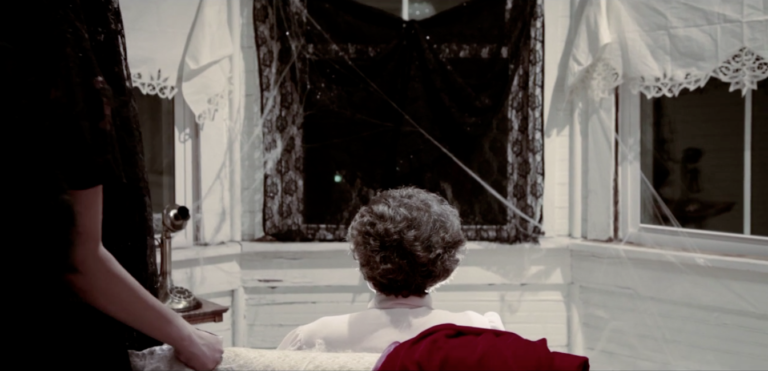
Now and then, revisiting a piece of work from the past can be a walk down memory lane. I recently stumbled upon a little gem from my time at the Savannah College of Art and Design, a short film that I had the privilege of contributing to as a set dresser. The film, “Mort,” directed by David M. Davis and with the artistic touch of production designer Miranda Frederick, offered a poignant narrative that left a lasting impression on everyone involved.
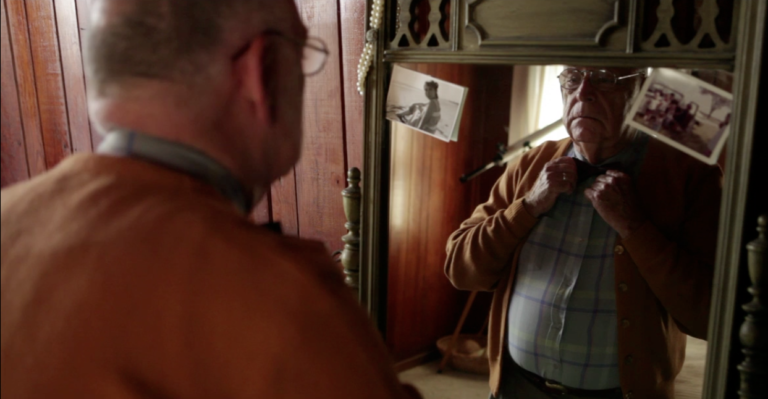
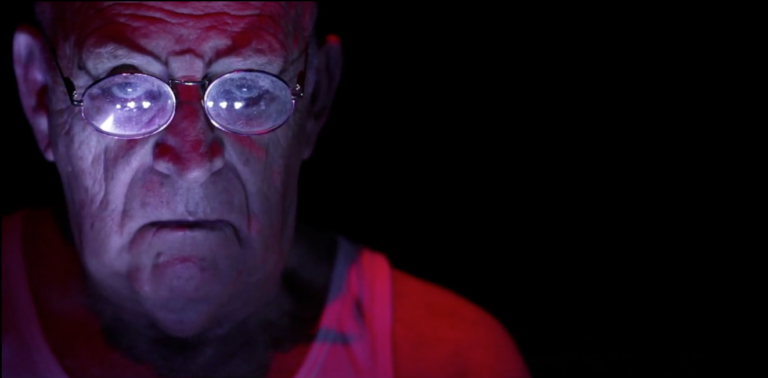
The storyline was a unique blend of fantasy and emotion, focusing on the encounter between an older man and his grim reaper. As he faces his mortality, the film takes us on a journey of self-discovery and acceptance.
Set dressing for this project was an exciting challenge. It was not just about creating a visually striking environment; it was about crafting a space to convey the complex emotions and themes at the heart of the story. Every piece and every detail played a role in telling the narrative.
As I look back on this experience, I can’t help but feel a wave of nostalgia. It was a time of creative exploration, filled with late-night discussions and collaboration with talented friends and colleagues. Working on “Mort” was not just about the final product; it was about the journey, the shared passion for storytelling, and the bonds formed during its creation.
Today, I’m excited to share the trailer of this remarkable short film, a token of the hard work and dedication poured into it by a group of passionate individuals. It’s a reminder that creativity knows no bounds and can touch the hearts of both creators and audiences alike. As the tagline suggests, it’s a story about coming to terms with the end of life and the start of something unknown.
So here’s to the memories of “Mort” and the friends I made along the way. It’s a testament to the enduring power of storytelling and the magic that happens when creative minds come together to breathe life into a narrative.
Creating a Vampire Lair of Redemption on a Shoestring Budget
In the realm of independent filmmaking, creativity often takes center stage, turning limited resources into opportunities for innovation. This is precisely what we set out to achieve with the short film “Upyri.” With a shoestring budget, I embraced the role of art director to bring this vampire tale to life.
Synopsis
“Upyri” is a tale of redemption woven with elements of vampire mythology. At its heart, it revolves around Hubris, the enigmatic leader of the vampiric clan E’pohvul. Hubris’s character is driven by his insatiable thirst for blood and his quest for power, which are in constant conflict with the remnants of his human nature buried deep within.
In the world of “Upyri,” virgin blood holds a sacred significance, as it possesses the potential to enhance the abilities of those who partake in it. Hubris and his coven, including Invidia, Delilah, Thumps, Mammon, Morgans, and Pharos, are on a quest to find a unique virgin whose blood can grant them the ultimate power – the ability to reshape humanity in their own vampiric image.
Art Direction on a Budget
Faced with financial constraints, I embraced the challenge of creating a compelling and visually striking setting for our characters. One of the most remarkable aspects of this project was the development of a low-budget Vampire Lair. Here, my creative vision came to life.
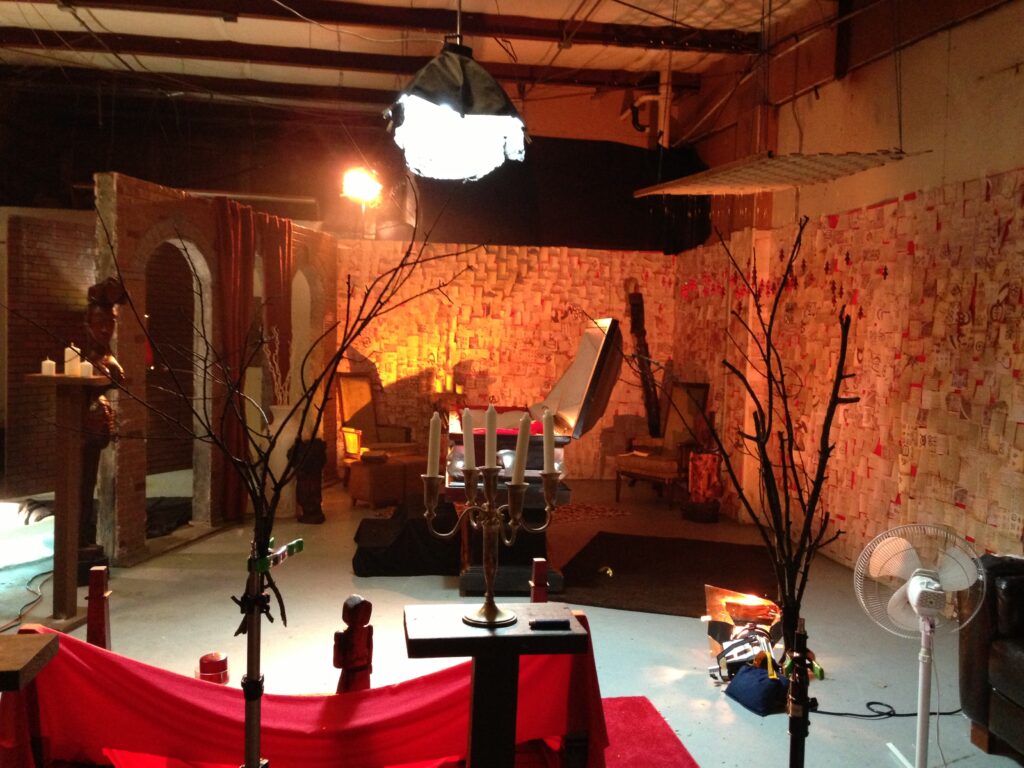
The Vampire Lair, intended as Hubris’s plotting chamber, became an evocative space filled with symbolism. We achieved this by layering postcards resembling ancient notes, over vibrant red-painted walls. The notes bore enigmatic symbols, hinting at the characters’ intentions and desires.
Additionally, we incorporated painted chess pieces into the design to symbolize the intricate plotting and strategy undertaken by Hubris. The chess pieces served as visual metaphors, representing the complex power dynamics and internal struggles of the clan.
As an art director, I relished maximizing the impact of the minimal resources available to us. The result was a Vampire Lair that felt immersive and thought-provoking, despite the budgetary constraints.
In collaboration with director Byron Erwin and director of photography Christian Monckeberg, we brought the world of “Upyri” to life. This project exemplified the boundless potential of creative storytelling, even in the face of limited means. It’s a testament to the power of imagination and resourcefulness in independent filmmaking.
“Upyri” stands as a testament to the magic that can be conjured when passionate filmmakers come together, driven by their shared love for storytelling and a willingness to take risks, even when working with the most modest of budgets.
The Colorful Grandeur of ‘The Adventures of Robin Hood’
In my twenties, I was utterly baffled by the critical praise for “Glorious Technicolor.” My only experience with the process was watching Nick-at-Nite trailers, which could never substitute for a theatrical screening. Honestly, I don’t even remember watching The Adventures of Robin Hood all the way through. So, I’m not afraid to admit that I was jumping around with glee while reviewing this film…seriously, I did not sit down. The saturation level in Adventures of Robin Hood was astonishing. Colors simply burst out of the screen and contemporary films like Run Lola Run, Limitless, or anything from Tim Burton or Terry Gilliam. From the parchment paper opening credits with their specially designed Warner Brothers shield, I was sold hook, line, and sinker…oops the wrong story.
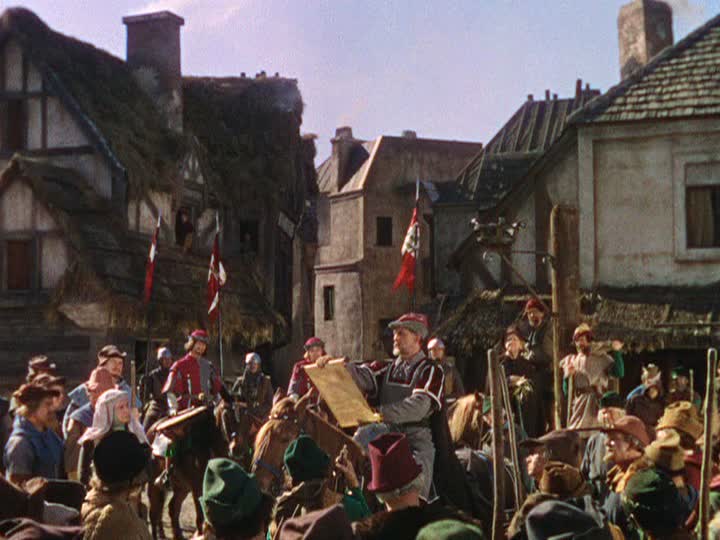
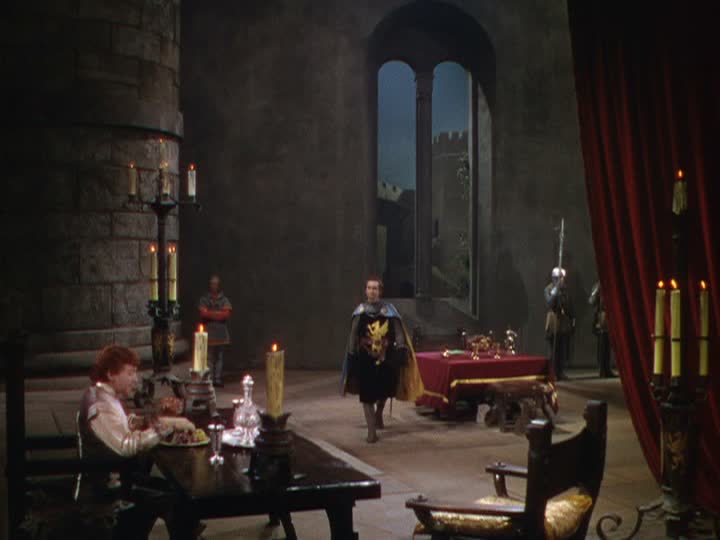
Let’s start in the town square where the royal messenger read news of King Richard’s capture by Leopold of Austria. Half-timbered style buildings, with their plaster, infilled exposed beams, framed the crowd and placed audiences on a sympathetic level with the townsfolk. The communal setting starkly contrasted with Nottingham castle’s barren stone walls, where Prince John forms his anti-Saxon plot. Compositionally, this started a trend where frames outside the castle were claustrophobically filled with people and activity but dialog inside showed extreme depth (instead of having actors shelled against walls). The scenic masonry walls were painted to perfection and punches of royal-red fabric made the eye jump from one side of the screen to the other. And just in case you missed it, when Prince John spills his wine, the dripping, crimson liquid is a not-so-subtle hint of the carnage to come.
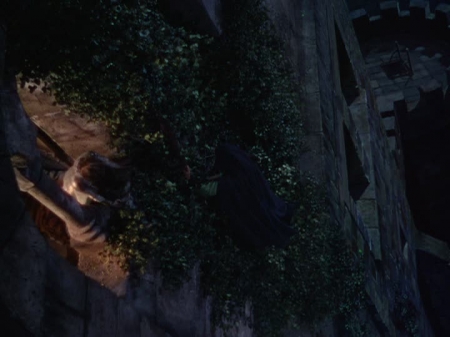
There were a few scenic missteps, like the rock formation from which Robin orated to his Saxon townspeople. It was a prop because the surface showed little sign of weathering or mossy overgrowth. However, many other elements carried the film to soaring heights. The matte paint drops (ex. exterior castle top or below Marion’s window) were the most expressionistic I’ve seen. I was captivated by the banquet hall’s working fire-pit, iron rivet doors, and all the rusted candelabras. Longbows, swords, and quarterstaffs (the name refers to hand position on the pole) were used with precision during the numerous friendly and not-so-friendly fight scenes. Also, I could think of several alternate decorative uses for Robin’s handsome, leather, arrow bag.
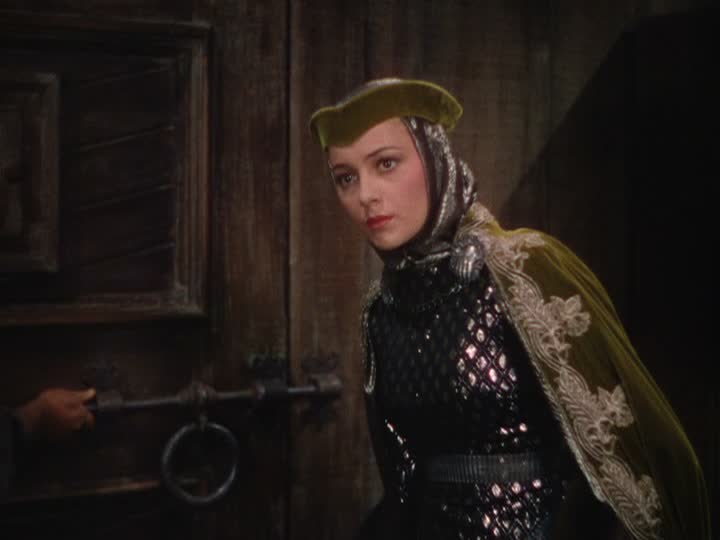
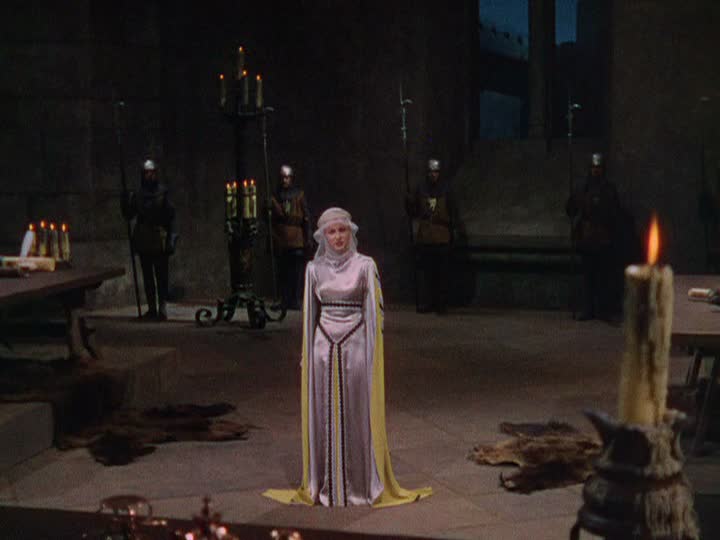
The Adventures of Robin Hood was switched from black and white to Technicolor at the last minute, so the wardrobe was designed with punchy contrast. The costumes in the film are inventive, tactile, and vibrant. They also gave me further insight into how art department designers achieved their tonal variety historically. Maid Marian’s constantly changing wardrobe remained a fictional, shimmering delight. Although choosing favorites would be impossible, costume high points for me were her archery contest glider, the garb worn in the Merry Men’s tavern, and her silver/yellow satin gown during her trial. The men were equally as graceful. Sir Guy of Gisbourne’s suede, emerald, poca-dot tunic worn while sending a henchman to kill King Richard was commanding.
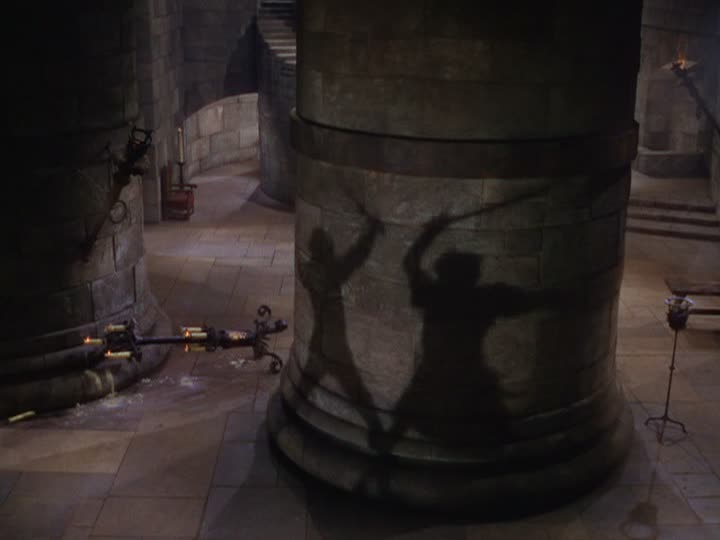
Lighting was unmotivated throughout the film but I didn’t care because the depth was so rich. Many scenes were filmed day for night, but cuts sporadically missed their blue lighting cues (especially studio process shots). One lovely forest scene, as Robin Hood escaped Prince John’s celebratory dinner, had stark moonlight streaks raining through dense oak tree branches. Director Michael Curtiz, also seemed to favor action playing out in silhouettes on the massive, block walls. Some famous examples shaded Prince John’s order to forfeit Locksley Estates and grazed the last battle between Robin and Sir Guy.
Despite switching directors mid-way through (Keighley-outdoor scenes, Curtiz studio shooting), Adventures of Robin Hood was a narratively vibrant piece of cinema. The film captured the pageantry of the period and added new zest and wonder. The Adventures of Robin Hood managed to stay faithful architecturally but pushed boundaries with their costumes’ textures and colors. It whole-heartedly deserved seven out of ten scenic fitches.
Crafting Dreams: A Journey into the MFA Thesis Project
Venturing into the realm of an MFA thesis project is like embarking on a profound artistic odyssey. It’s a voyage that delves deep into one’s creative spirit, pushing the boundaries of imagination. Today, I’m thrilled to share a glimpse of my SCAD Production Design MFA thesis project, an exploration that took me on a transformative journey through the enchanting world of cinema.
Plot:
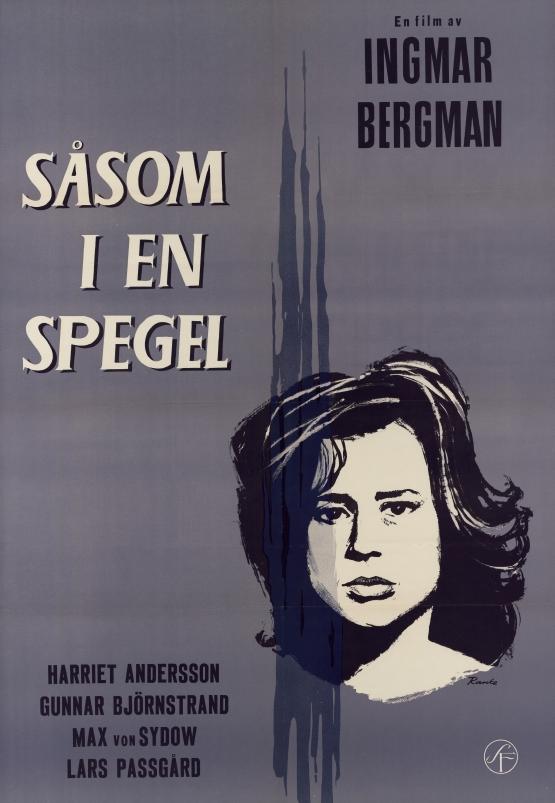
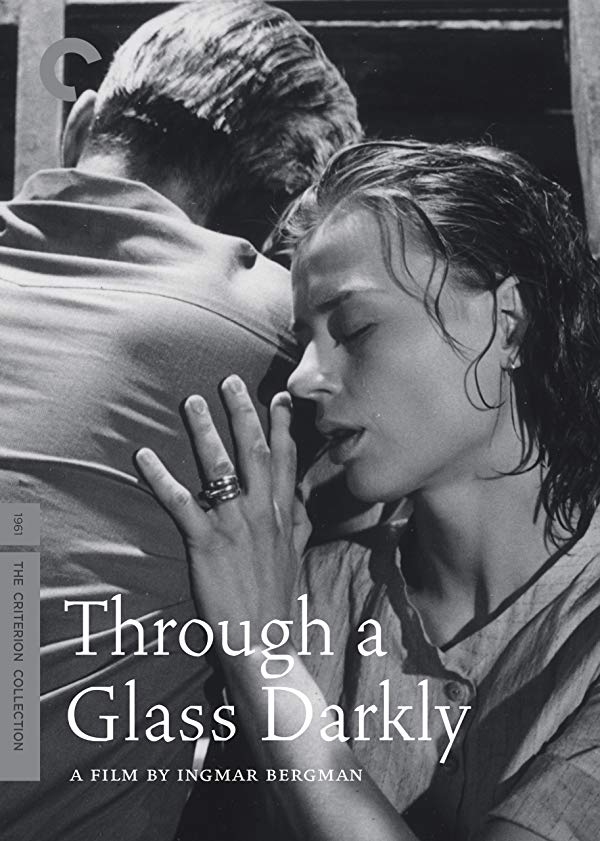
My journey began with the reimagining of Ingmar Bergman’s iconic film, “Through a Glass Darkly” (1961). This psychological masterpiece tells the story of four family members on a remote island vacation, focusing on Karin, who has recently been released from a mental institution.
Adaptation:
My mission was to infuse this narrative with a fresh perspective, moving the story from its original European setting to the vibrant tapestry of Jamaica. In this reimagining, a Jamaican family returns to their island home after migrating from Manchester, England, just before colonial emancipation in 1962. The house, once a place of refuge, had been locked up for several years, partially reclaimed by nature. Karin, entrusted with the task of revitalizing the space, grapples with her inner demons and experiences vivid hallucinations.
THE Concept:
The House:
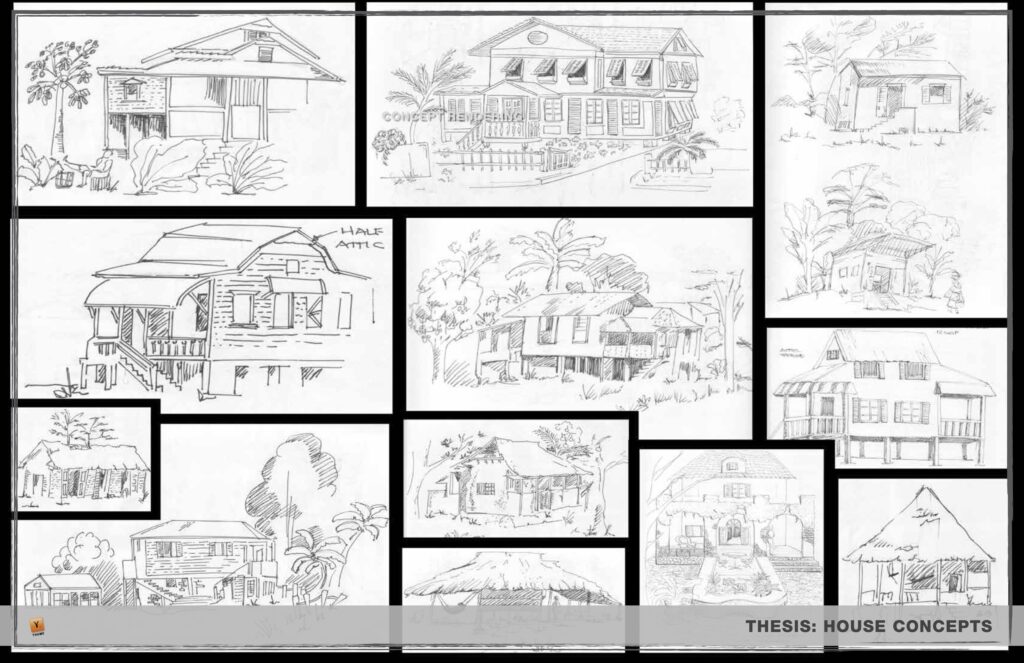
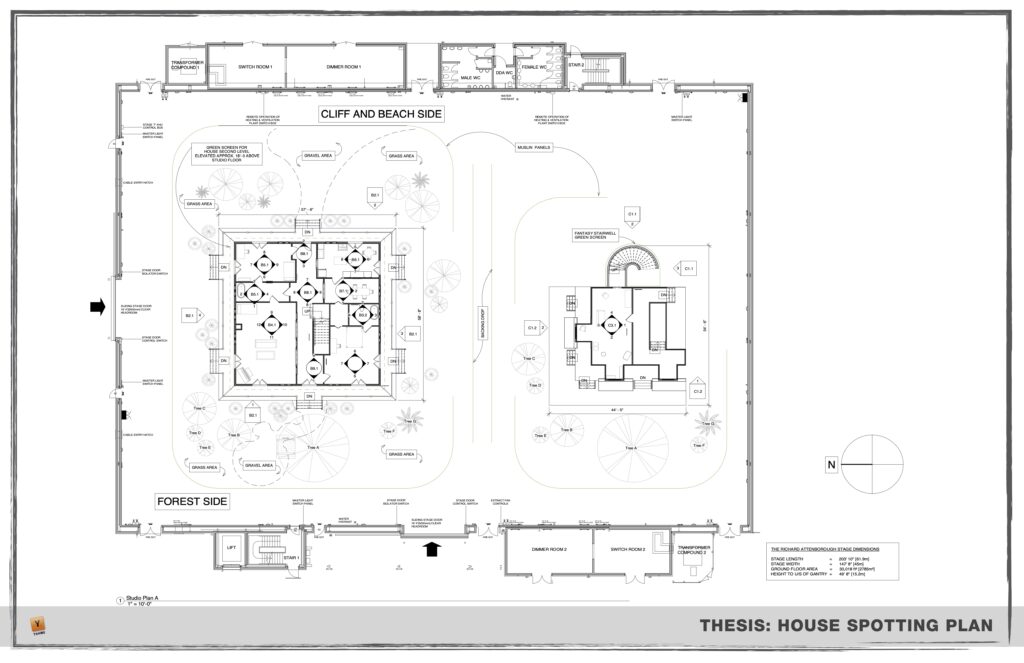
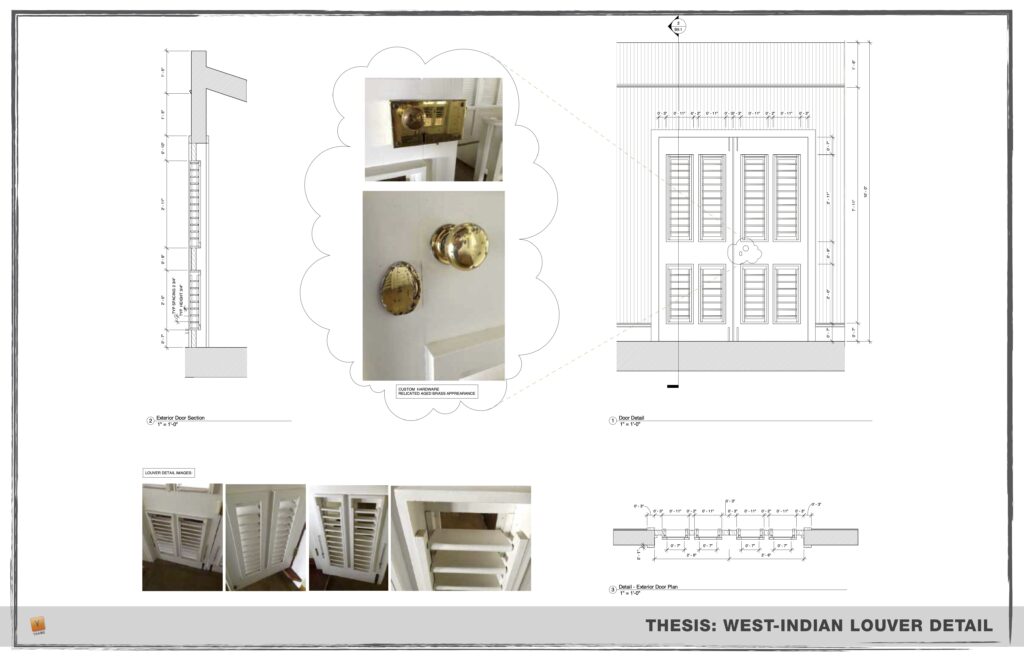
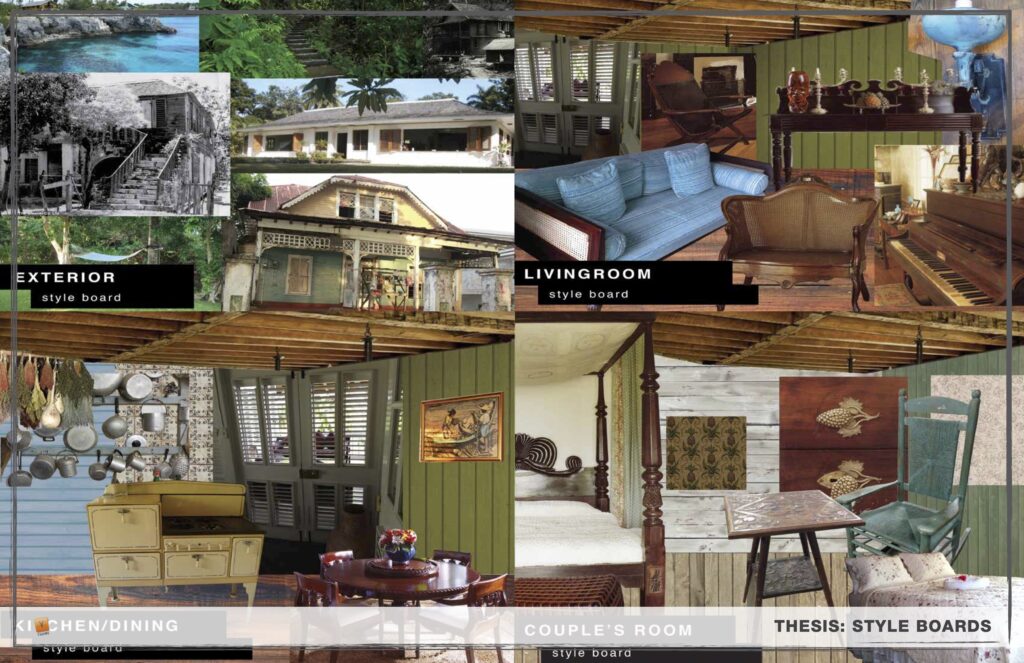
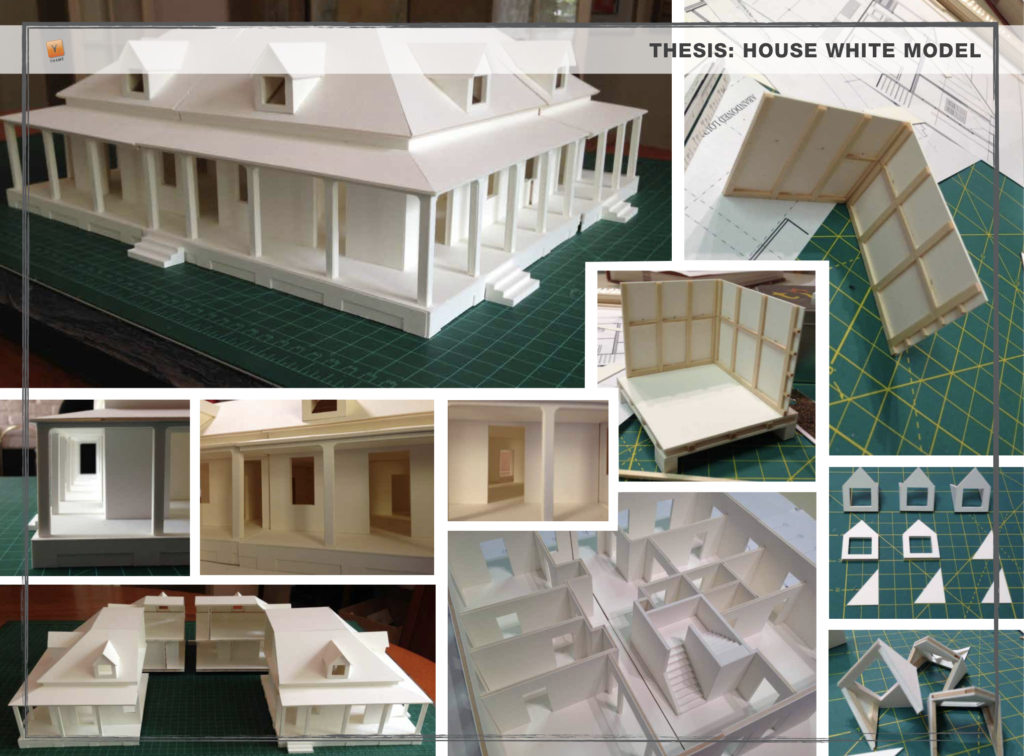
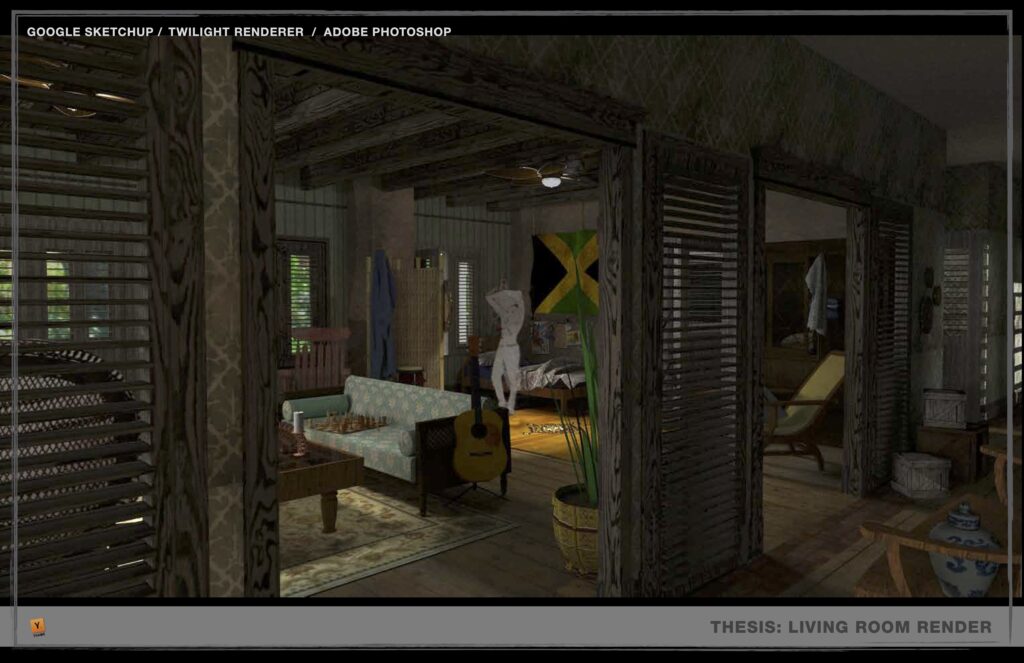
Central to the project was the transformation of the sprawling plantation house, slowly being devoured by the encroaching forest. Its faded, dry color palette symbolized its vulnerability and the toll of domestic life on Karin’s mental state. The wrap-around porch’s spindly columns hinted at the family’s French Creole heritage, leaving them exposed to the elements and one another. Inside, the house was a chaotic mix of colonial furniture, ancestral keepsakes, travel memorabilia, and symbols of island pride, reflecting the struggle to reconcile cultural and personal traumas.
Fantasy:
Karin’s hallucinatory journey led her to a dramatic Gothic-influenced hall where she confronted her deepest fears. High ceilings, obscured by undulating rosary windows, seemed to slither up the walls. Spider-like tendrils held antique wooden furniture in suspense, poised to move at any moment. In the center of this surreal space, icy water encroached from the flooded exterior, while luminous capsules containing matriarchal symbols floated in a wading pool. Karin’s interaction with this space initiated a profound transformation, shaking her psyche and the chamber itself.
The journey I undertook in this MFA thesis project was an exploration of storytelling through the lens of production design. It allowed me to reimagine a classic narrative, blending elements of the original with fresh perspectives and cultural nuances. The resulting vision was a vivid tapestry of colors, textures, and emotions that transcended the boundaries of traditional cinema.
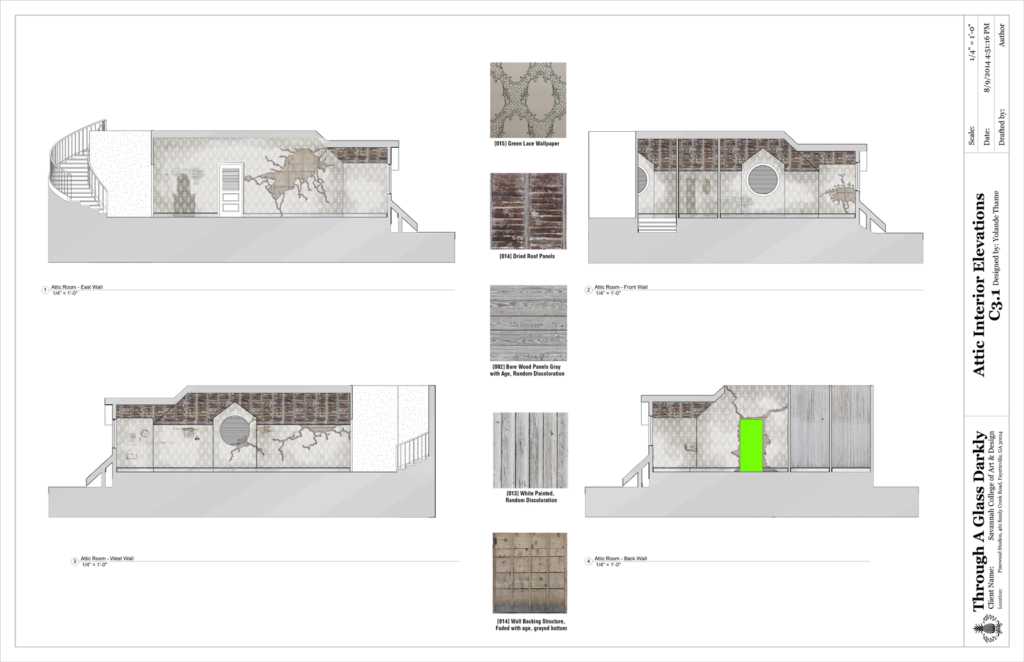
This project is a testament to the power of art direction in shaping narrative experiences, making it an unforgettable chapter in my artistic journey. While I can’t share the entire 150-page paper today, these presentation slides provide a glimpse into the world I crafted, bringing Bergman’s classic into a new light.
In crafting dreams and giving life to imaginative landscapes, I’ve discovered the boundless potential of storytelling through art direction.
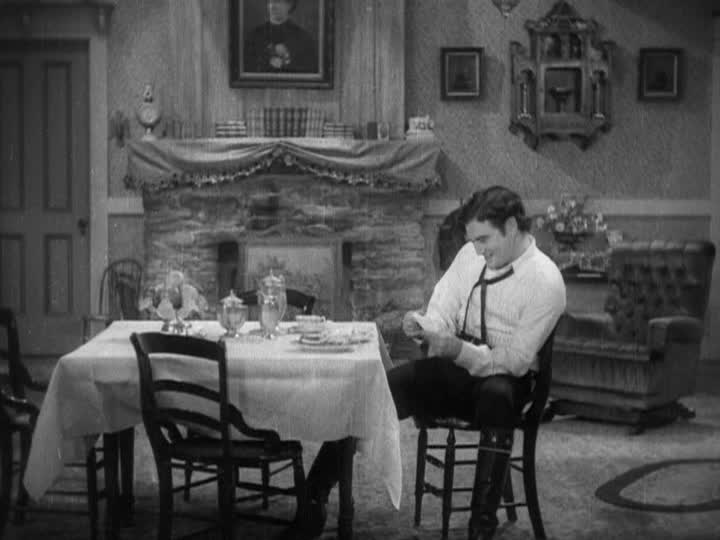
Cimarron Chronicles: A Land Rush Through the Eyes of Art Direction
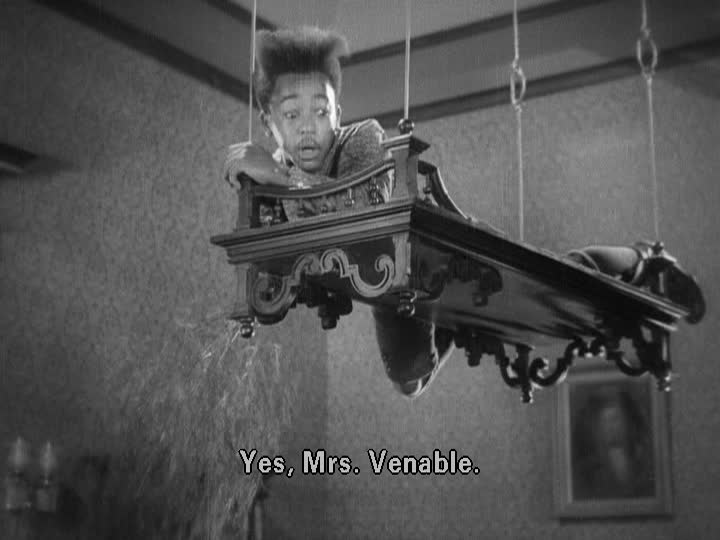
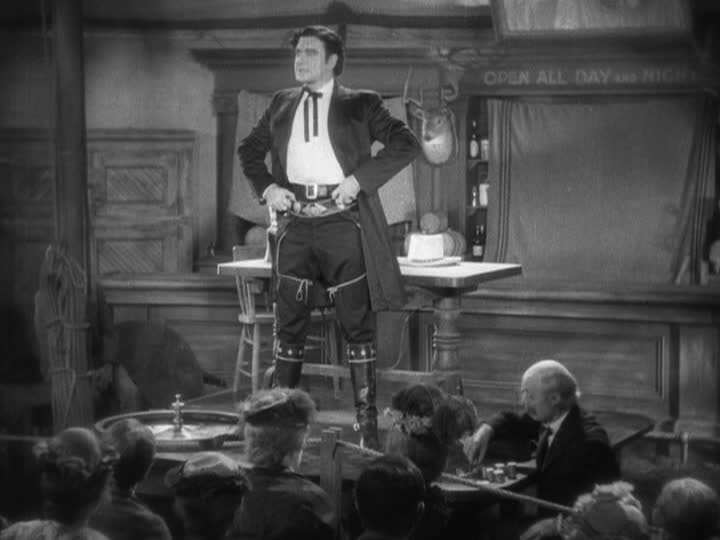
Before delving into the brass tacks of “Cimarron,” it’s essential to express a few personal reflections. The rapid shift from silent films to synchronized talkies in just over a year is nothing short of awe-inspiring. It’s a testament to human ingenuity. Secondly, despite the film’s troubling portrayals of marginalized groups, it surprisingly emerges as a captivating piece of cinema history, with moments that left me laughing out loud. Lastly, I can’t help but believe that Yancey Cravat served as the blueprint for Elvis Presley’s persona, from the wavy locks to the cocky demeanor.
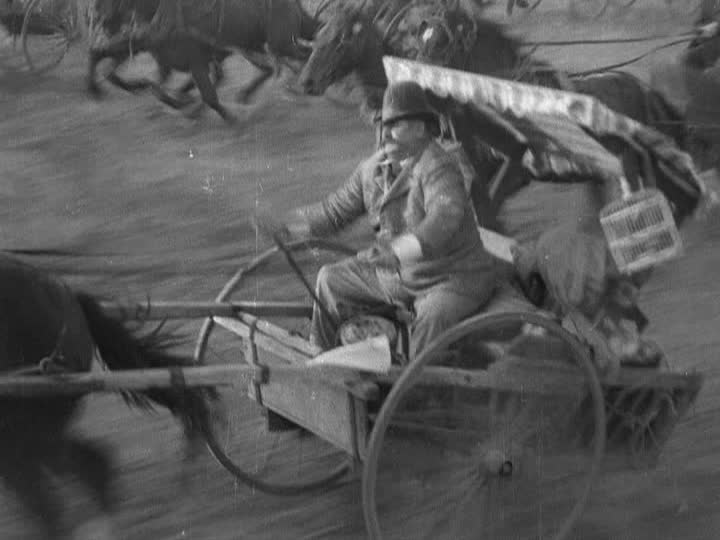
Now, to the artistic assessment. Max Rée’s creation of the 1889 Indian Oklahoma Lands is a world I would have enjoyed living in if it weren’t for the glaring prejudices and injustices depicted. The film brims with energy, much credit to cinematographer Edward Cronjager. The scenic design, a colossal undertaking for its time, merits top marks for believability. The land rush scenes whisk viewers into the excitement of claiming territory that wasn’t rightfully theirs. Director Wesley Ruggles wisely uses static aerial views to mark the passing years in Osage’s main market street.
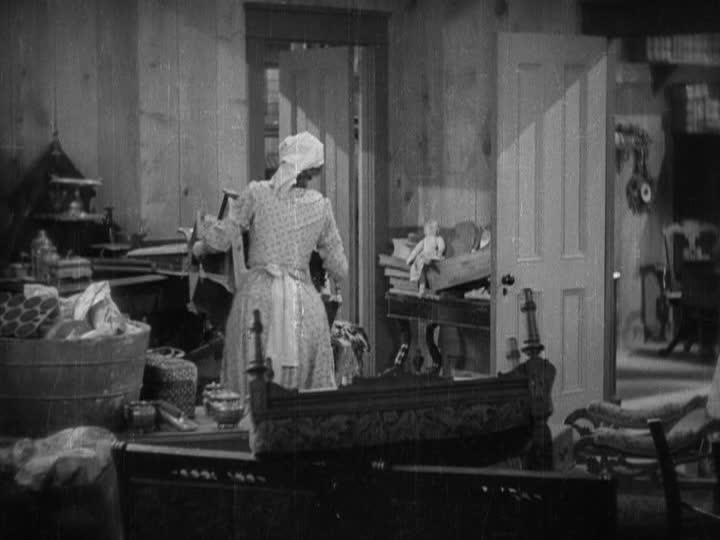
What stands out most is the attention to detail. Hand-painted signs, battered barrels, and canvas tents fill the scenes, creating a vibrant and layered world. The transformation of the Carvats’ family home mirrors the town’s evolution, capturing the spirit of carving success in an uncharted landscape. The film’s rich, nuanced visuals, even in silence, convey its essential themes.
The Douglas DC2, prominently featured in the film, is a stunning example of the early days of commercial aviation. This sleek classic transport, rented from American Airlines, provided an exquisite backdrop against the rugged mountain landscapes. The plane’s interior, meticulously recreated on a soundstage, exudes luxury, riveted leather, and warm wood paneling, making it a highlight of the film’s set design. Even the intricacies of the cash register at Grat Gotch’s Hall of Chance add a layer of authenticity and delight to the scenes.
While “Cimarron” may have its shortcomings, particularly in its portrayal of marginalized groups, it excels in its scenic design. The film transports viewers to a bygone era, capturing the energy and excitement of a land rush, and providing a meticulously detailed world. For these reasons, “Cimarron” certainly earns its place as a captivating piece of cinema history, despite the blemishes. In our exploration of its scenic elements, it secures a solid seven out of ten scenic fitches.