Evidence · Feature Film · 2016
The Founder
Overview
The sets had to do storytelling work, not just look period-accurate. The original McDonald's had to feel like something a family invented with care and ingenuity. The franchise locations had to feel like that same idea being copied, flattened, and replicated until the soul is gone.
Project Context
The Founder tells the story of how Ray Kroc took a small, family-run hamburger stand in San Bernardino and turned it into the McDonald’s corporation. For that story to work on screen, the audience needs to feel the difference between the original McDonald’s — a hand-built, hand-run place that the brothers genuinely cared about — and what it became once corporate franchising took over. That difference had to live in the architecture.
I was the sole set designer on the film, working directly and collaboratively with Production Designer Michael Corenblith.
What Was at Stake
McDonald’s is one of the most documented companies in American history. That means there is a lot of evidence to get wrong. Archivists, historians, and McDonald’s itself would be watching. The original restaurant in Downey, California still exists and is still operational — so anyone who wanted to fact-check our sets could go look at the real thing.
The deeper challenge was making the architecture tell the story. The arc from handmade to industrialized needed to be visible in the buildings themselves, not just in the performances.
Structural Complexity
Historical accuracy. Every material, proportion, piece of equipment, and surface finish had to match documented sources — archival photographs, original blueprints, McDonald’s training films, and the still-standing Downey location I visited and documented in person.
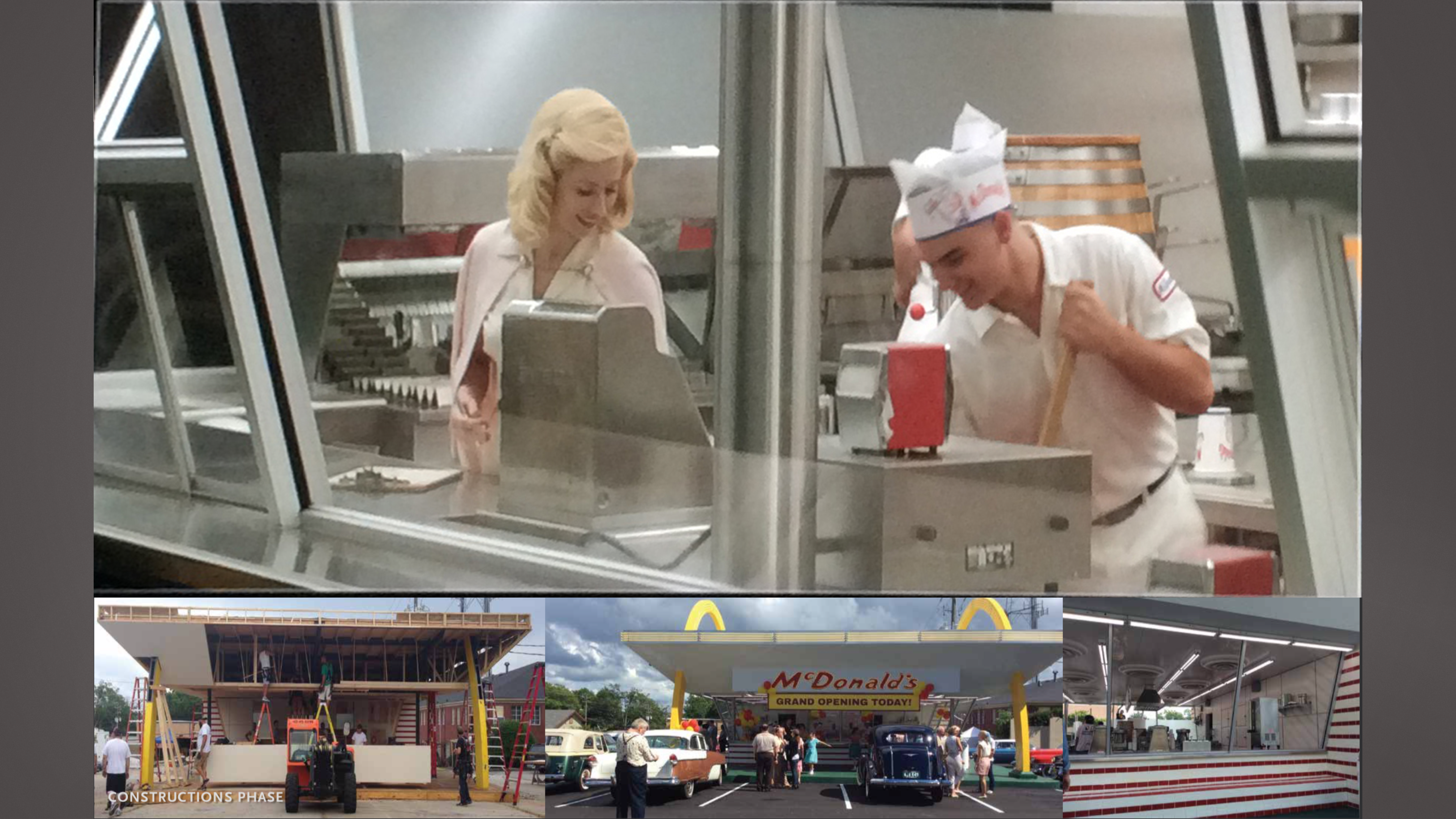
Functional kitchens. The sets weren’t decorative. The kitchens had to actually work — actors cooking on real equipment, real fryers, real surfaces — while also meeting contemporary safety codes.
Workflow choreography. The most important scene in the film — where the McDonald brothers chalk out their kitchen system on a tennis court and rehearse it like a ballet — required me to reverse-engineer their actual burger assembly process so the spatial logic of the set matched the logic of what they were doing. The kitchen layout had to visually explain the innovation, not just house it.
Modular construction. I had to design the hero McDonald’s set as a system that could be redressed — different signage, different parking lot striping, different surrounding landscape — to read as a new town each time, without rebuilding from scratch for every new franchise location.
Camera-ready architecture. The early McDonald’s design is defined by floor-to-ceiling glass walls. I had to design wall sections that could be physically removed to get cameras and lights in, without the building losing its open, glass-heavy character when reassembled.
My Role
I was the sole set designer on this production. Every technical drawing, every construction document, every spatial layout and material specification came through me. Michael brought the vision and the research instinct — we found sources together, debated details together, made decisions together — and I turned those decisions into the documents that builders could actually follow.
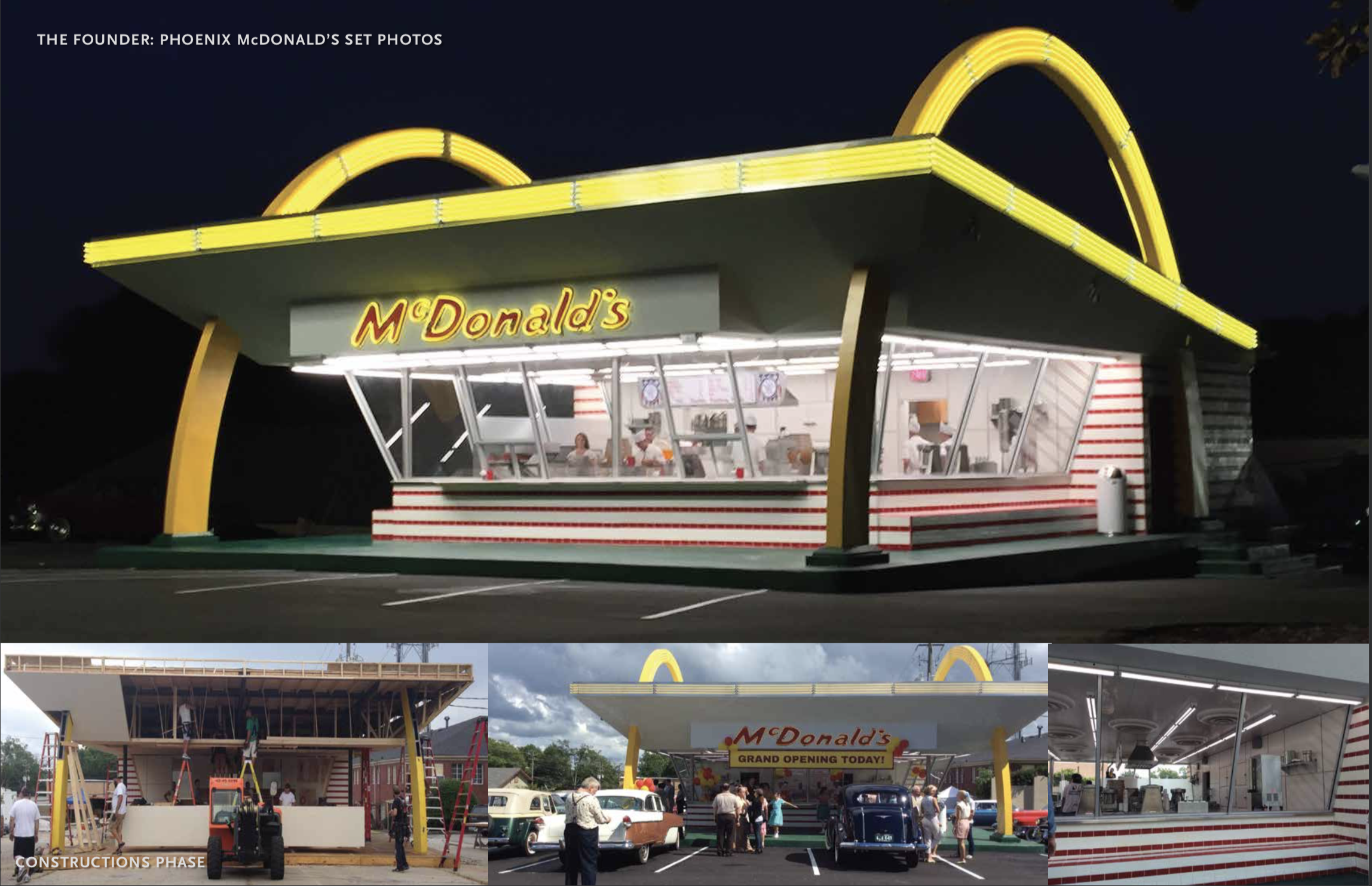
Sets I was responsible for: the original San Bernardino octagonal McDonald’s (built from scratch in a parking lot in Newnan, Georgia, fully functional); the golden arches McDonald’s hero set (built in a church parking lot in Douglasville, Georgia, with red-and-white striped tile, floor-to-ceiling glass, and twin yellow arches scaled to 1950s prototypes); the modular franchise redress system; and the full roadside America ecosystem — drive-ins, motels, diners, suburban streets.
Specific Decisions I Made
I traveled to the still-operational historic McDonald’s in Downey, California to document the actual building in person — proportions, materials, equipment placement, finishes. That visit became the baseline everything else was checked against.
For the tennis-court scene, I reverse-engineered the McDonald brothers’ Speedee Service System from historical records so the kitchen layout matched the actual workflow they were choreographing. The fryers, the pass-throughs, the counters — their positions were the argument the brothers were making about efficiency. The set had to make that argument visible.
I designed the golden arches hero set as a modular system from the beginning — not as a finished building to be later adapted. Building modularity in from the start meant knowing in advance which elements were fixed (the arches, the tile, the glass) and which could change (the signage, the parking lot, the surrounding context).
For the glass wall problem, I designed the exterior wall sections as removable panels — the crew could pull a wall out in the morning and put it back for a wide exterior shot in the afternoon.
For the surrounding roadside environment, I chose period materials — neon, Formica, painted brick, chrome — deliberately more muted than the McDonald’s palette. The golden arches needed to feel like a visual interruption. That contrast had to be designed, not assumed.
My Judgment
The two things I’m proudest of on this film are the historical research depth and the modular franchise system — because they’re connected. The research told me exactly what was fixed and essential about the original McDonald’s design. That knowledge is what made it possible to design a modular system that could change the right things while protecting the wrong ones.
You can only successfully redress a set across multiple locations if you deeply understand which elements carry the identity and which are interchangeable. The arches, the tile, the glass — those are load-bearing brand elements. The parking lot striping and the surrounding signage are not. Understanding that distinction came directly from the archival research.
Challenge
Every detail of the original McDonald's had to be verifiable against the still-standing Downey location anyone could visit. Historical accuracy was non-negotiable — but accuracy alone wasn't enough. The architecture had to perform the film's central argument about what franchising does to an original idea.
Approach
I traveled to the Downey location in person to establish a ground-truth baseline, then reverse-engineered the McDonald brothers' Speedee Service System from historical records to ensure the kitchen set made the workflow spatially legible. Then I designed the hero set as a modular system from day one — knowing which elements were brand identity and which could change.
Outcome
The golden arches hero set became the visual anchor of the entire film. Every time Kroc's expansion accelerates, you're seeing variations of that one set — which is exactly the point. The architecture performs the theme: one idea, replicated until it covers the country.
You can only redress a set across multiple locations if you deeply understand which elements carry the identity and which are interchangeable.
Yolande Thame · on The Founder
Production Gallery
 FEATURE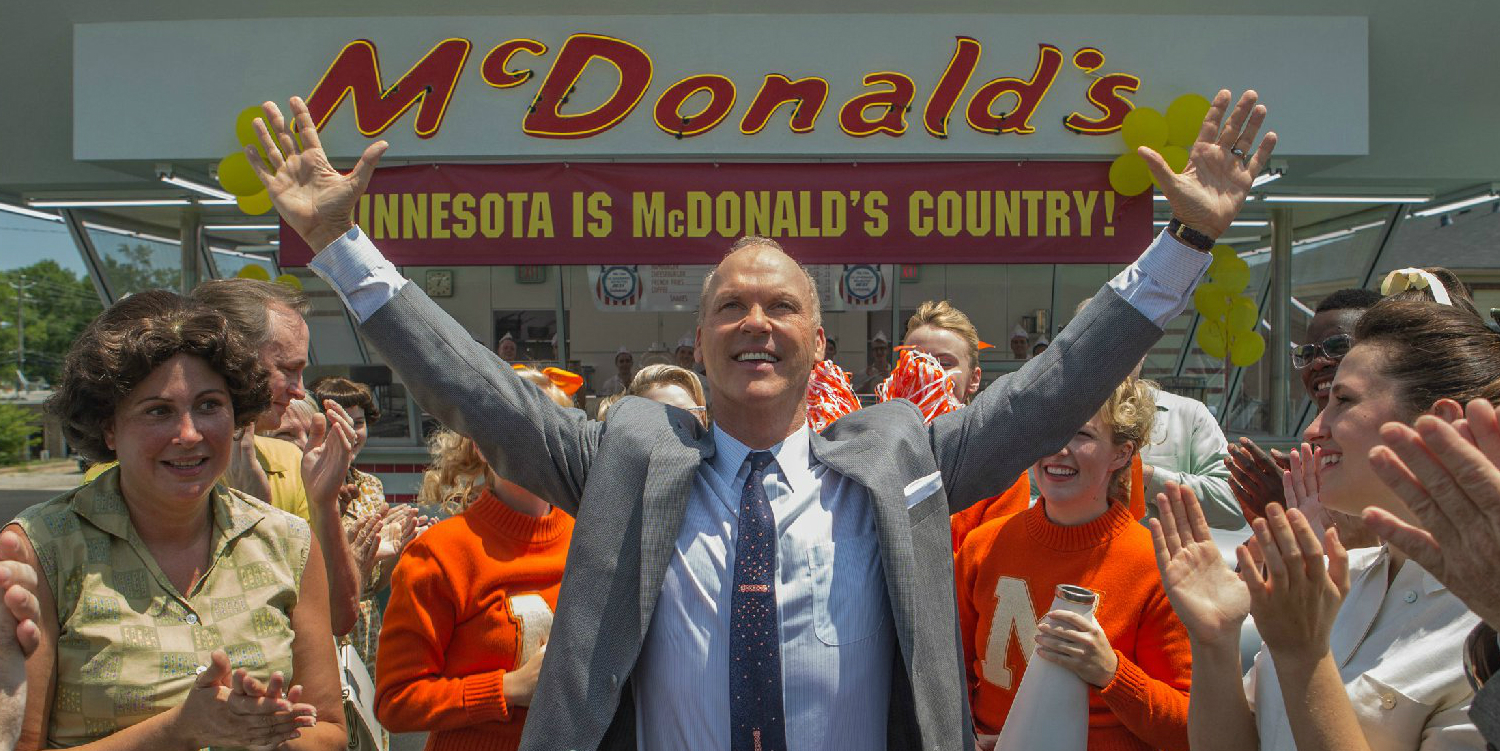

All studio-owned imagery displayed with full production house credit for professional portfolio purposes. Set drawings and technical documents are original work by Yolande Thame.
Impact
The golden arches hero set is the visual anchor of the film. Every time Kroc’s expansion accelerates, you’re seeing variations of that one set I designed — which is exactly the point. The architecture is performing the theme: one idea, replicated and replicated until it covers the country.
The Speedee Service kitchen and the tennis-court scene work because the spatial logic of the set matches the spatial logic of what the brothers invented. The audience can follow the choreography because the kitchen makes the system legible. That legibility was the design goal.
For me, The Founder established what rigorous historical research looks like in practice on a film set — not as an academic exercise but as the foundation every construction and design decision rests on. It’s the standard I’ve held myself to on every project since.
Next step