Evidence · Feature Film · 2022
Wakanda Forever
Overview
Talokan had to be built on real Mayan history, real architecture, and real cultural research. It could not be another invented Atlantis — and my job was to make sure nothing culturally important got lost between the research and the construction crew.
Project Context
Wakanda Forever introduced Talokan — a Mesoamerican underwater civilization living 12,000 feet below the Atlantic Ocean. The film’s Production Designer, Hannah Beachler, was the first and only Black female Production Designer Marvel had ever hired. Her mandate was clear: Talokan had to be built on real history, real architecture, and real cultural research.
I was one of three Black set designers on a team of 35. My job was to take Hannah’s vision and the academic research behind it and turn it into something a construction crew could actually build — drawings, models, specifications, details — while making sure nothing culturally important got lost in translation.
What Was at Stake
Talokan is a Mesoamerican civilization. That means its visual language — its symbols, its proportions, its materials, its spatial logic — had to come from actual Mayan architectural and cultural research, not from imagination or generic ‘ancient civilization’ shorthand.
If any of that slipped — if a glyph was wrong, a proportion was off, a structural form was borrowed from the wrong culture — it would register to Mesoamerican communities watching the film as carelessness. Or worse, as the same erasure that Hollywood has always committed against non-Western cultures. Hannah had fought to get this right. My job was to make sure it stayed right all the way through to construction.
Structural Complexity
Cultural accuracy. Every architectural detail had to be grounded in real pre- and post-classical Mesoamerican research. There was no room for invention where accuracy was possible.
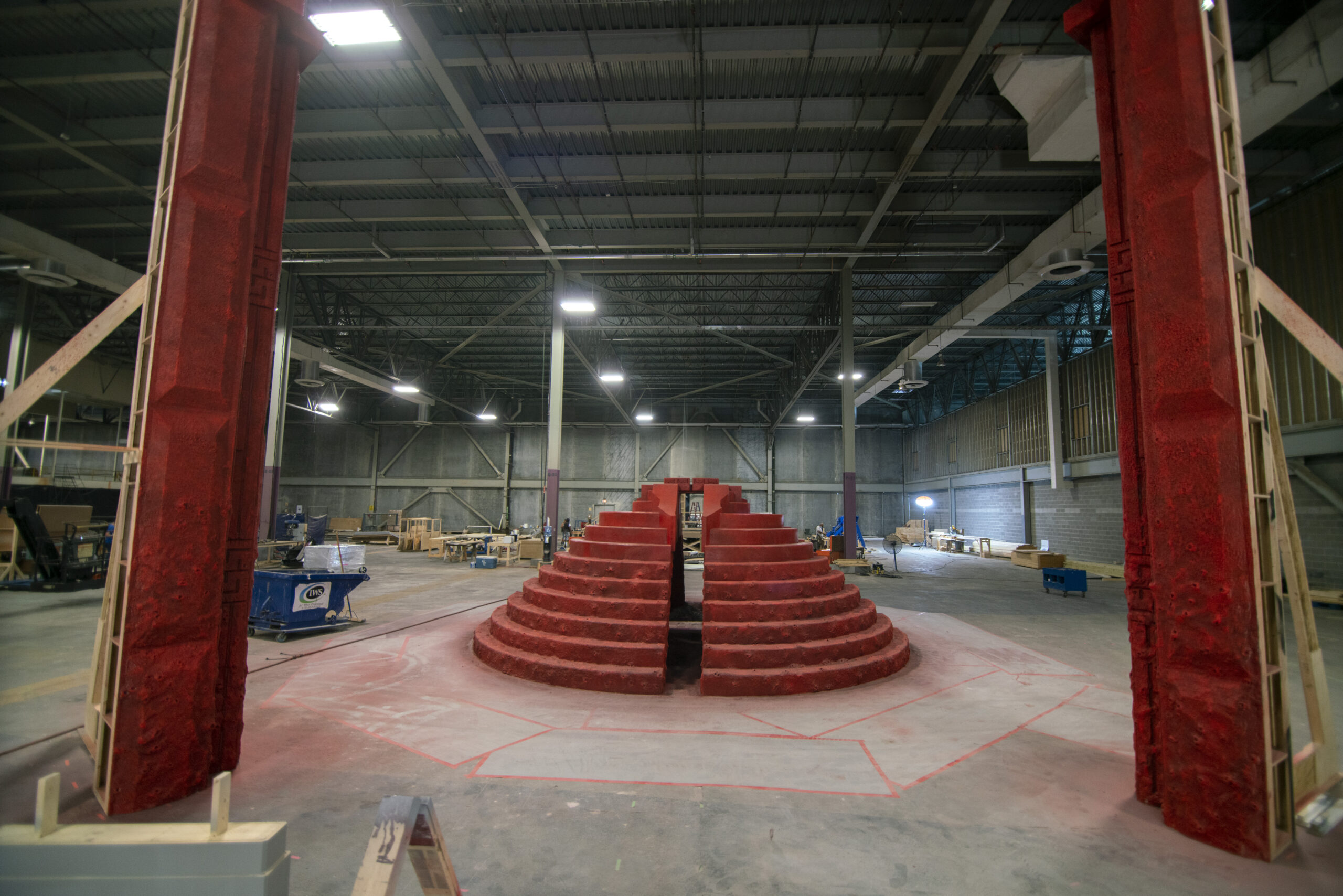
The wet-for-wet / dry-for-wet problem. Sets were filmed two ways: actors and cameras actually in 80-foot water tanks, and on dry stages lit and dressed to look underwater. I had to design sets that worked convincingly in both conditions.
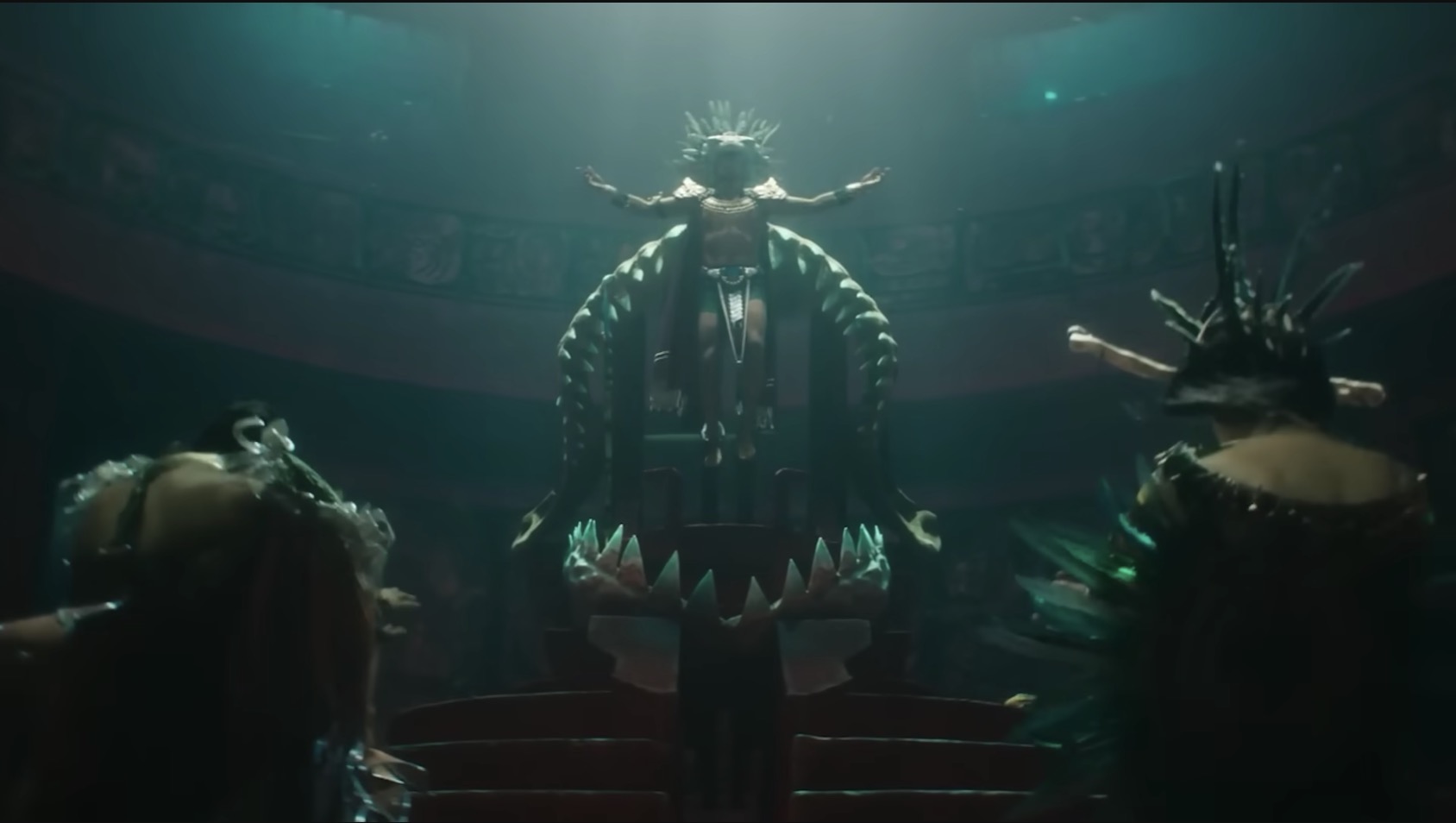
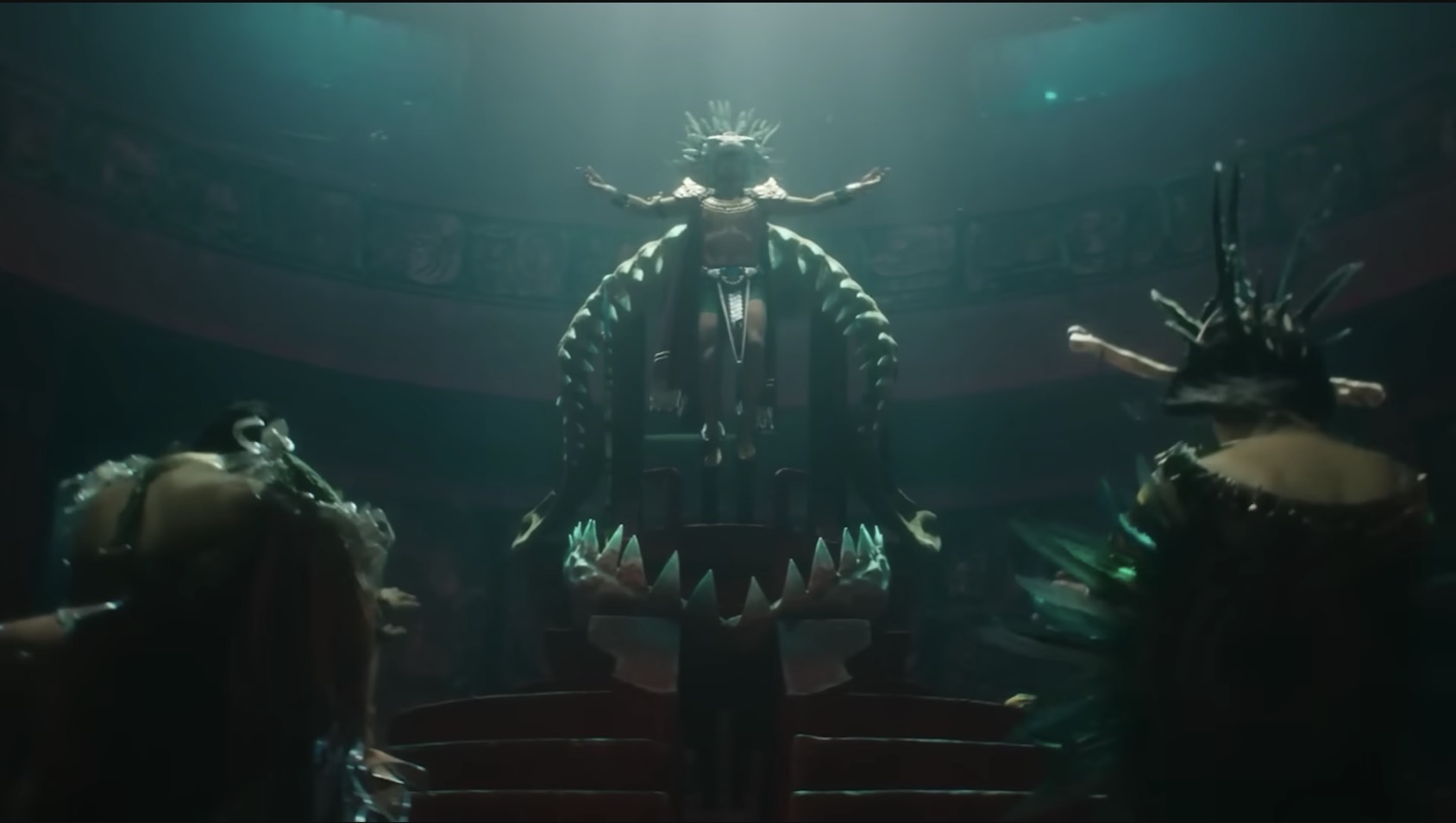
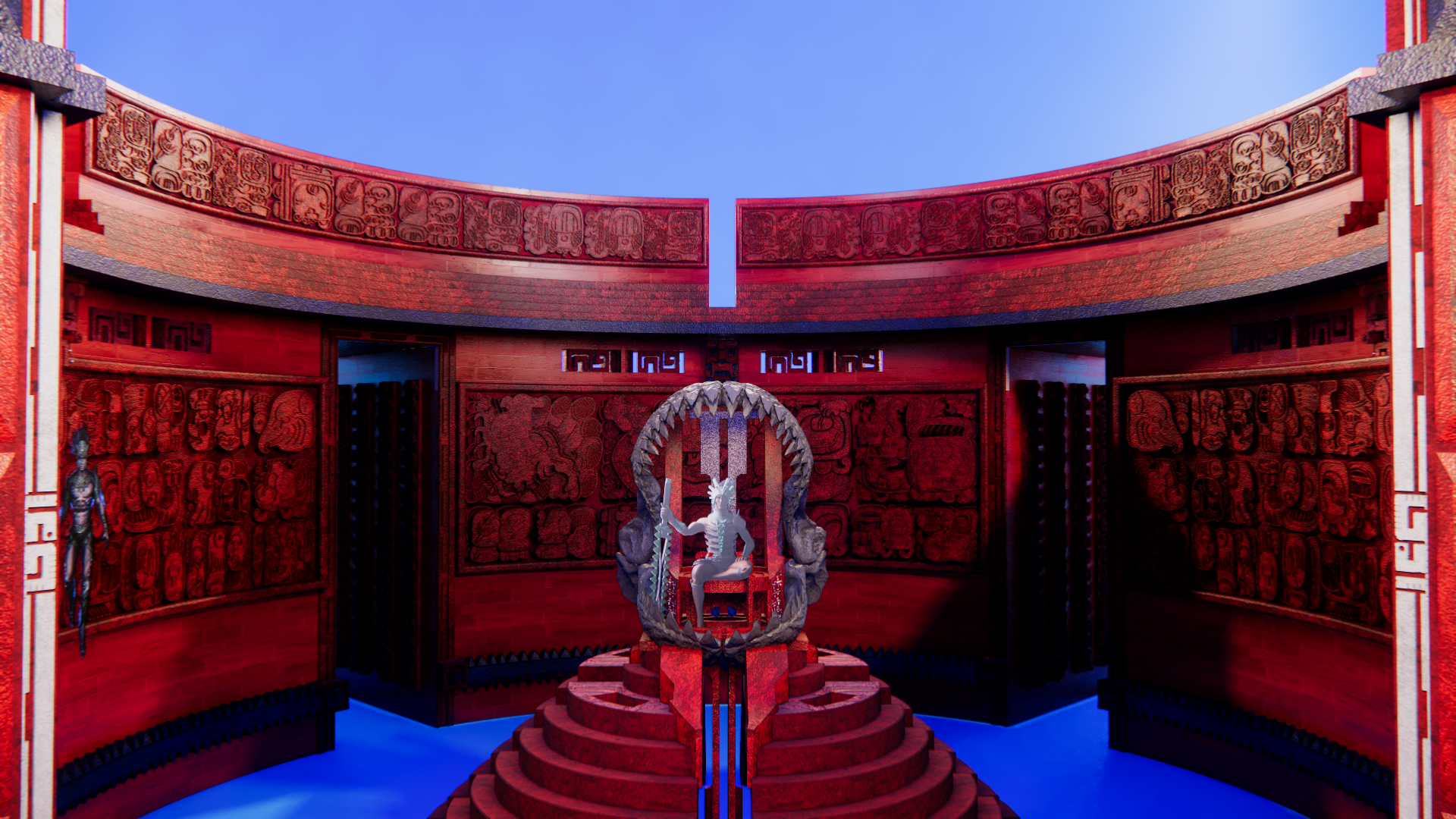
The red light problem. Red light disappears first as you go deeper underwater. Namor’s throne room needed to read as red — a culturally significant color in Mayan design — while still looking physically believable at depth. That required designing the carved relief forms specifically so VFX could preserve the red without it looking fake through a simulated water column.
Coordination across three teams. My drawings had to work for the construction crew building the physical sets and as reference for Weta FX extending those sets digitally. Three different teams, three different needs, one set of documents.
My Role
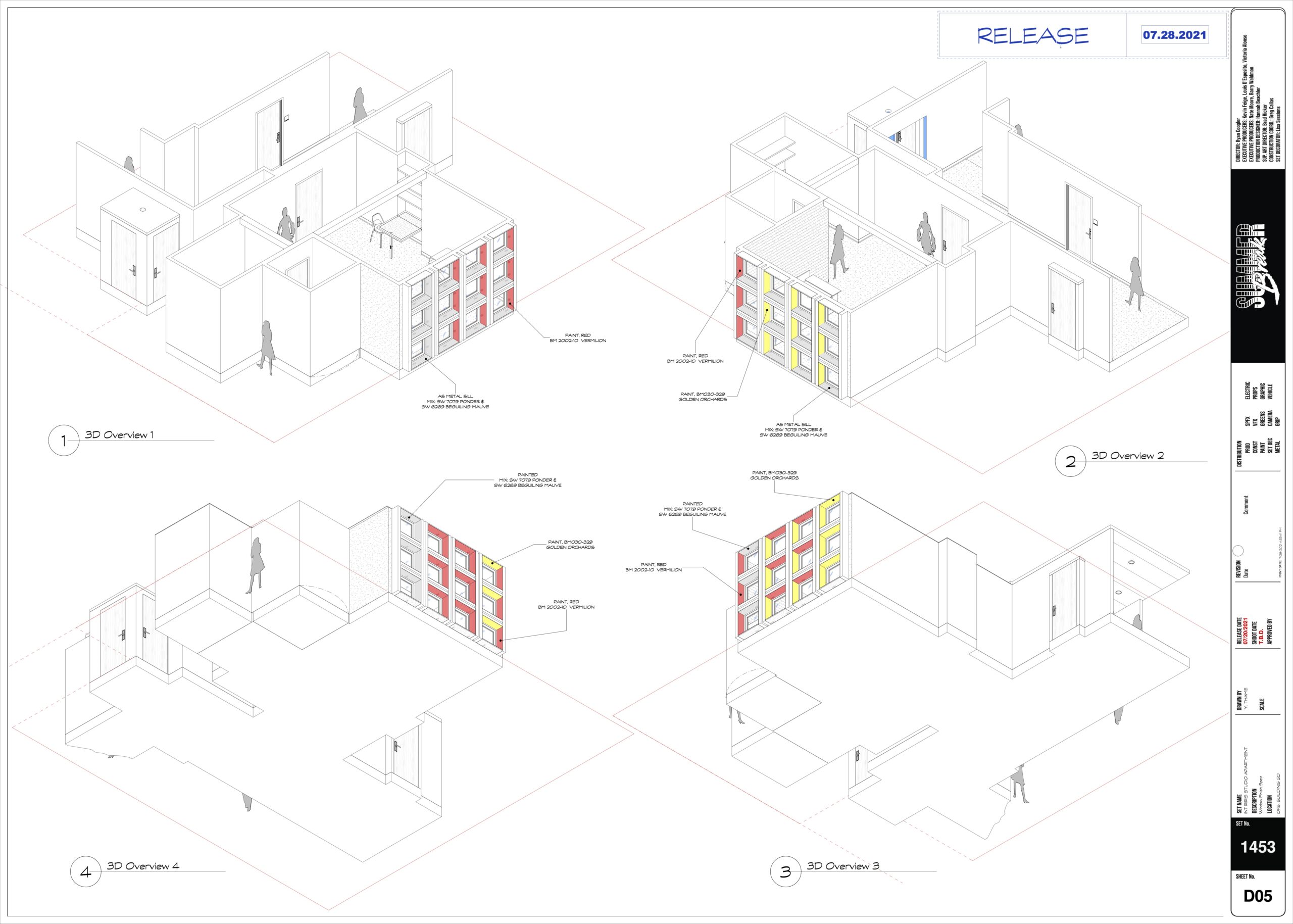
I was responsible for translating cultural research into construction-ready documentation. I read the academic sources on Mesoamerican architecture, worked with the research consultants, and turned that knowledge into technical drawings, carved relief designs, spatial layouts, and material specifications that builders could follow without losing what made the design meaningful.
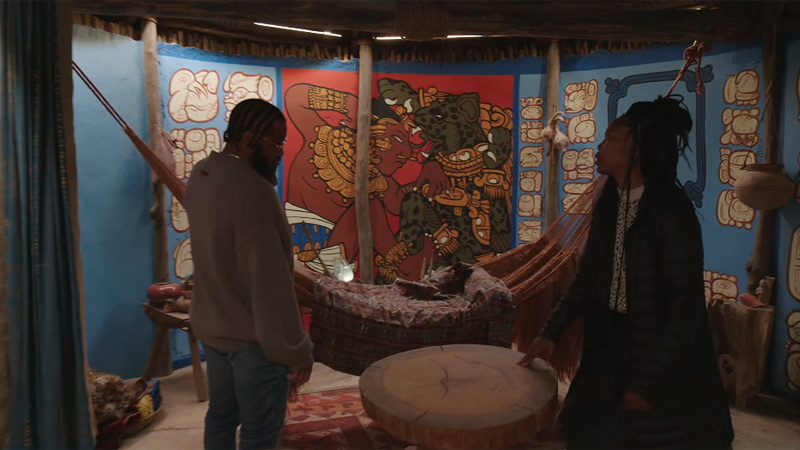
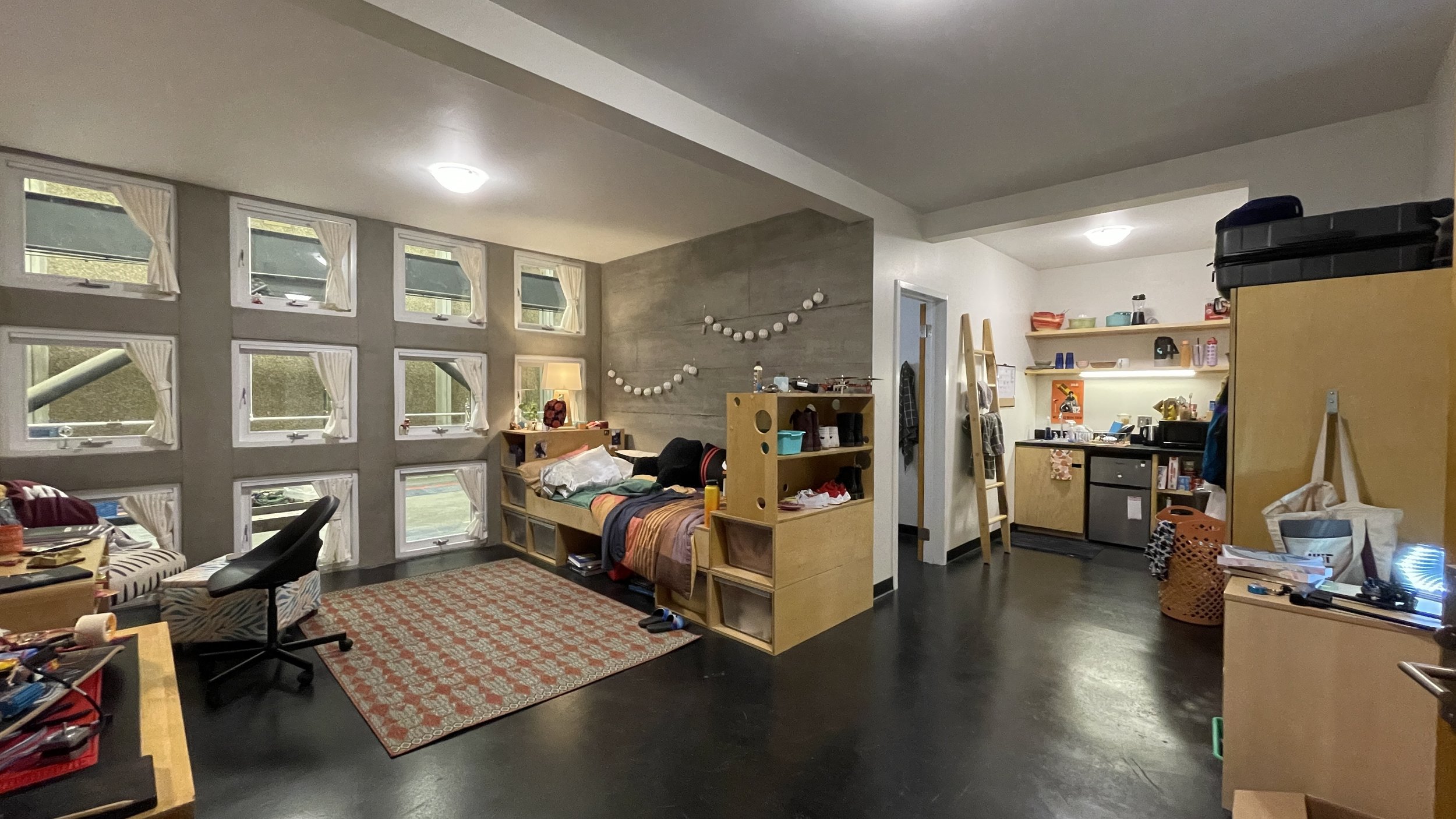
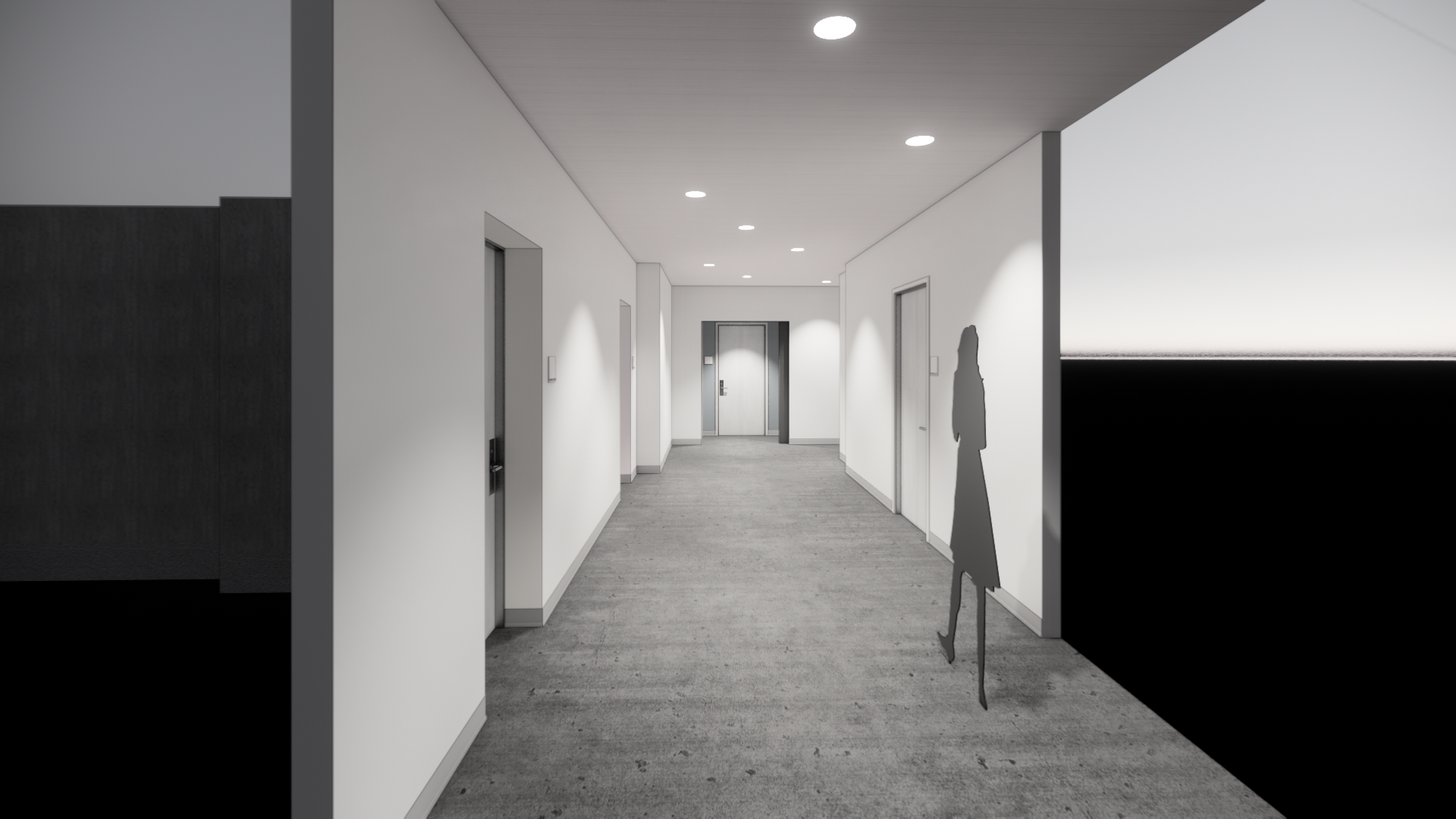
The specific sets I worked on included Namor’s Throne Room (primary Talokan ceremonial space, including the carved reliefs and the red light challenge), the Yucatán hut structures (including the memory room where Shuri receives the bracelet from Namor, with the painted iconography on the walls), the Talokan civic spaces (dressed with statuary, agricultural motifs, offering spaces), the royal aircraft entry sequence, the 1571 Yucatán flashback sets at Las Palmas Beach in Puerto Rico, Riri Williams’ MIT dorm, and the scouting ship helipad where vibranium is first discovered.
Specific Decisions I Made
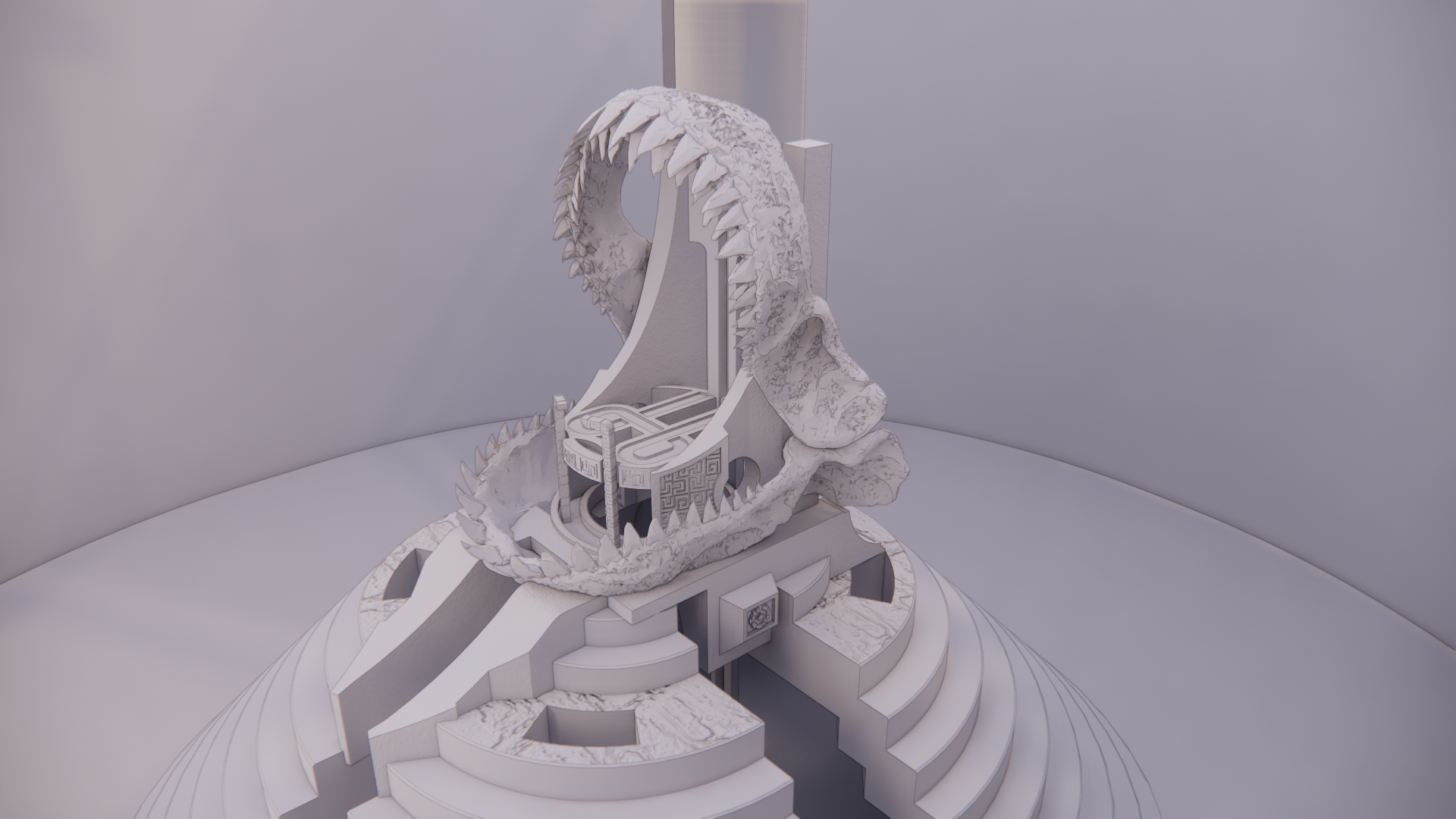
On the throne room, I designed the carved relief forms to be sculptural enough to catch and hold red light — so VFX had surface geometry to work with when rendering the red wavelength at depth. The forms had to be Mayan in their logic, not just decorative shapes that happened to catch light.
For the civic spaces, I insisted on agricultural motifs — corn specifically — and offering arrangements grounded in actual Mesoamerican practice. These details are what make Talokan feel like a real society with food systems, spiritual practices, and daily life rather than a movie set dressed to look impressive.
For the Talokan structural forms, I used heavy compacted masses and buttressing that could plausibly exist under real water pressure. I avoided glass domes and anything that read as fantasy. The city needed to look like it had been engineered by people who understood their physical environment.
For the memory room iconography specifically, I worked from actual Mayan painted wall traditions to ensure the images Shuri sees had a real visual grammar behind them, not invented symbols.
My Judgment
The hardest problem on this film wasn’t technical. It was making Talokan feel like a real civilization — one with history, agriculture, worship, grief, and daily life — rather than a visually spectacular backdrop for superhero action.
A fantasy backdrop can be built quickly from imagination. A civilization has to be researched, argued for, and protected at every stage of production. My job was to hold the line between research and construction — and to hold it consistently, even when the pressure was to move faster or simplify.
Challenge
Every architectural element of Talokan had to be grounded in real Mayan research — not invented. Getting it wrong wouldn't just be a visual failure; it would register as erasure to the communities whose culture was being represented.
Approach
I operated as the bridge between Hannah Beachler's design vision, the cultural research consultants, and the construction crews — turning ethnographic accuracy into buildable documentation while protecting every culturally significant detail through multiple rounds of production pressure.
Outcome
Talokan reads as a real civilization, not a fantasy backdrop. The specific sets I worked on appear in the film's most memorable sequences and hold up because the details are right — not approximately right, but right.
A civilization has to be researched, argued for, and protected at every stage of production.
Yolande Thame · on Wakanda Forever
Production Gallery


 FEATURE
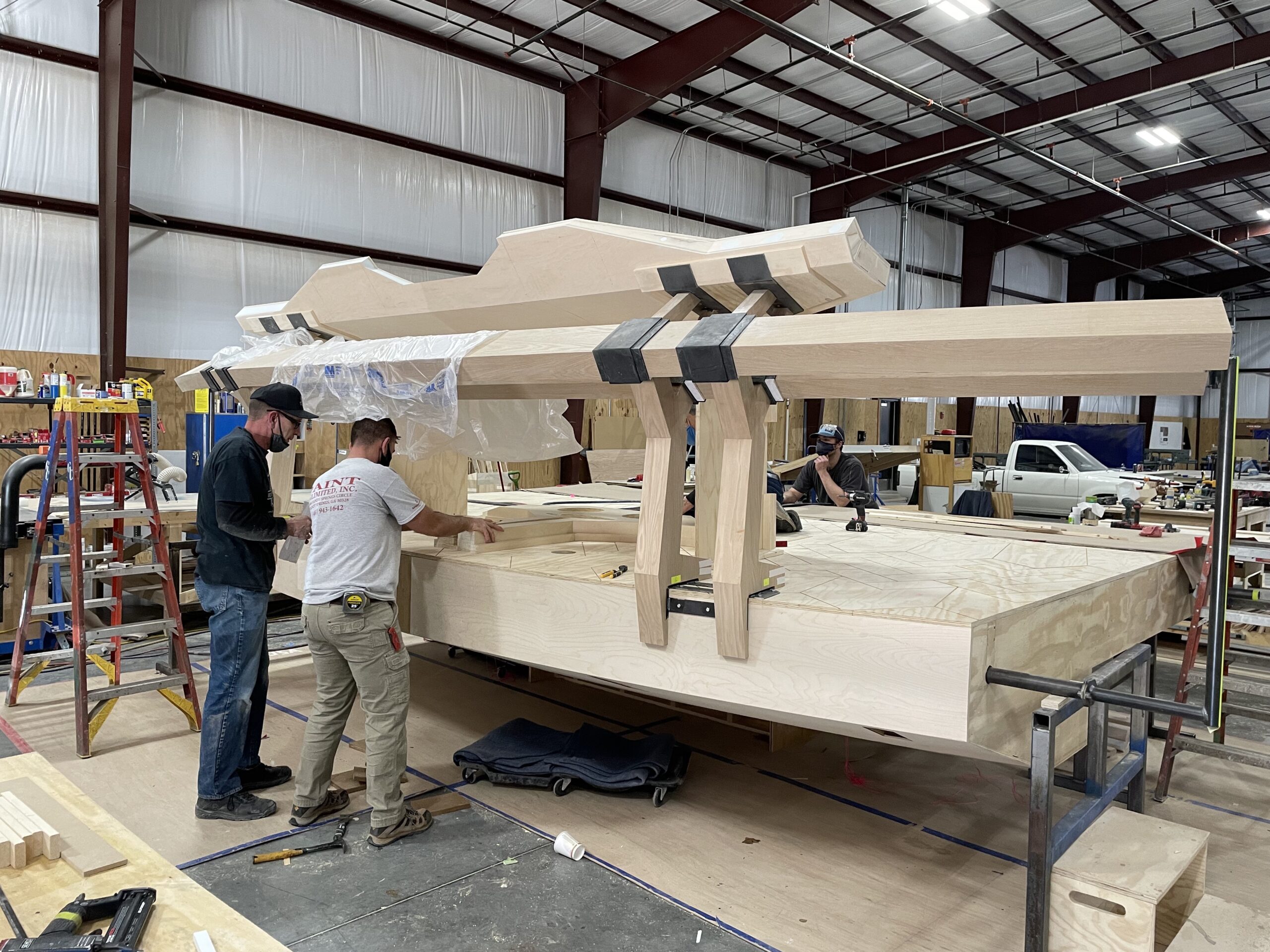

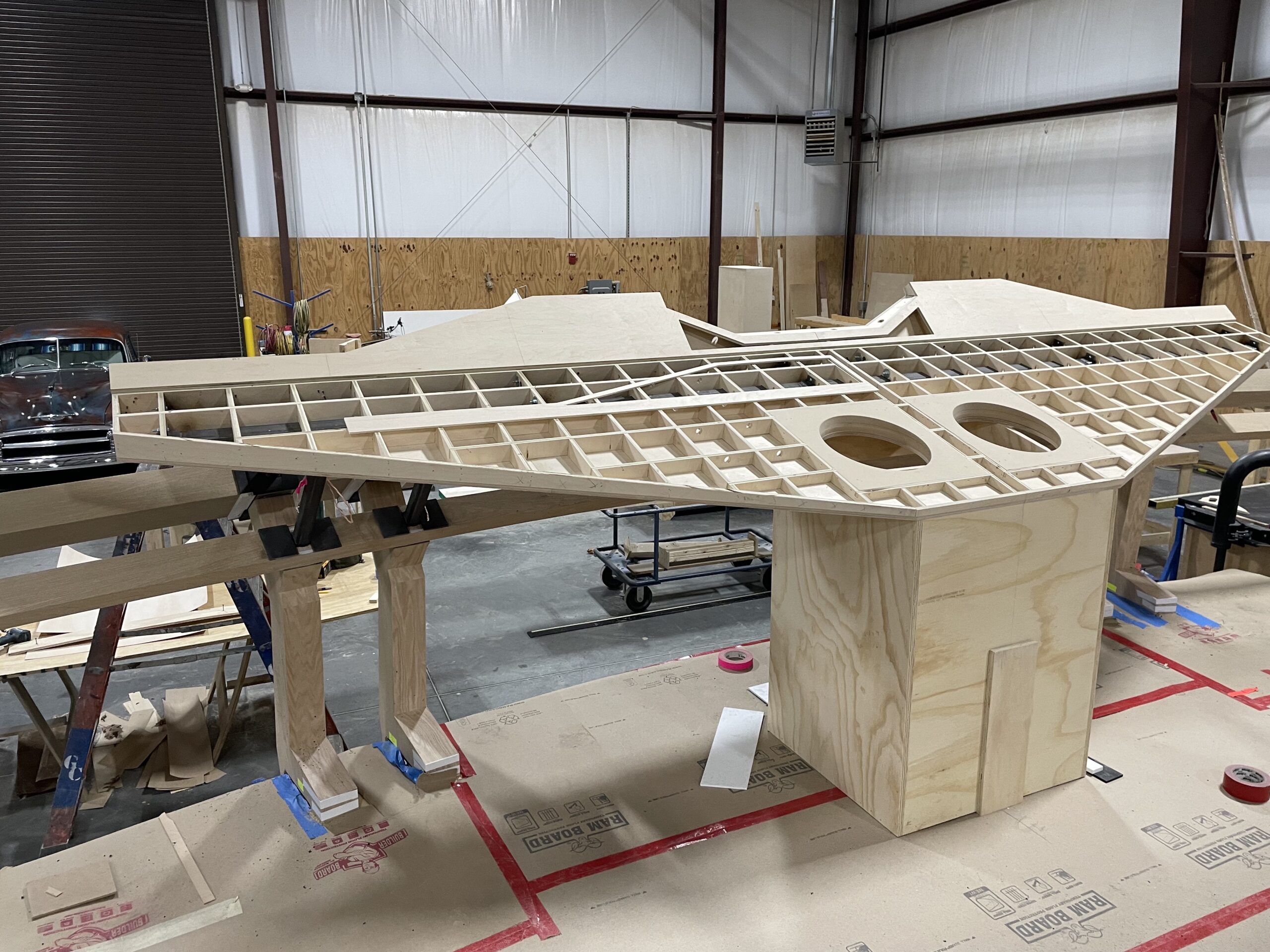
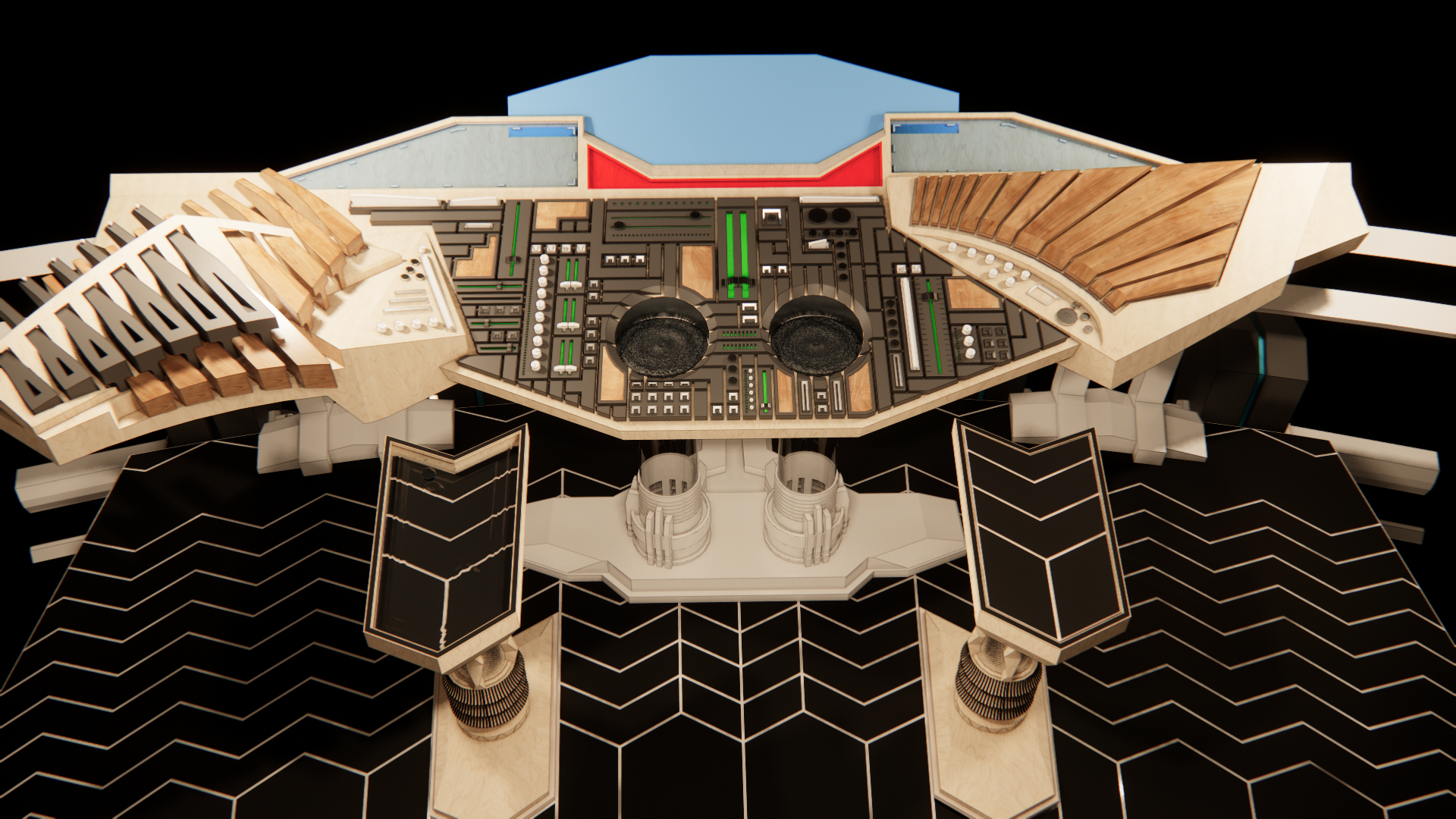

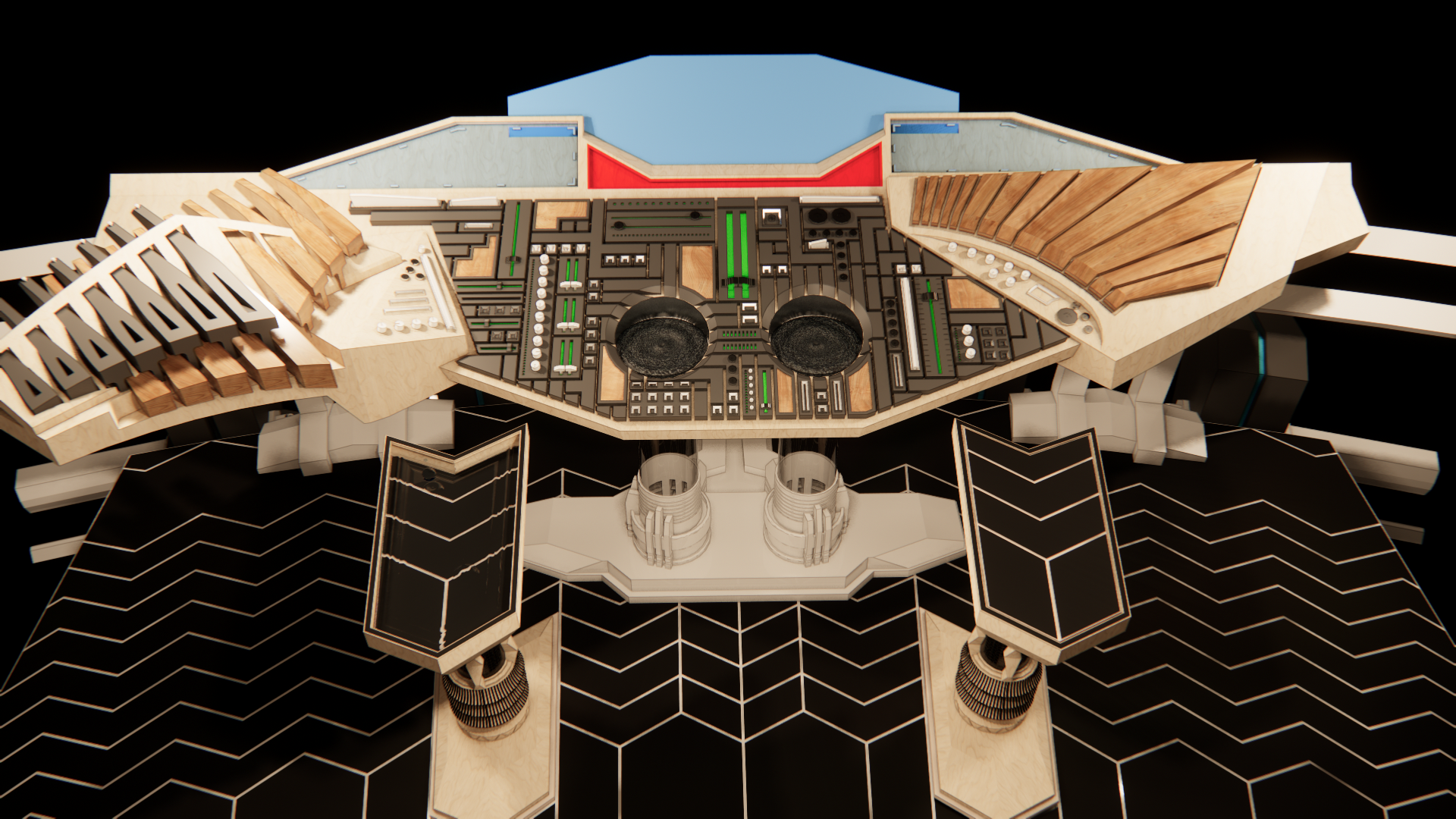


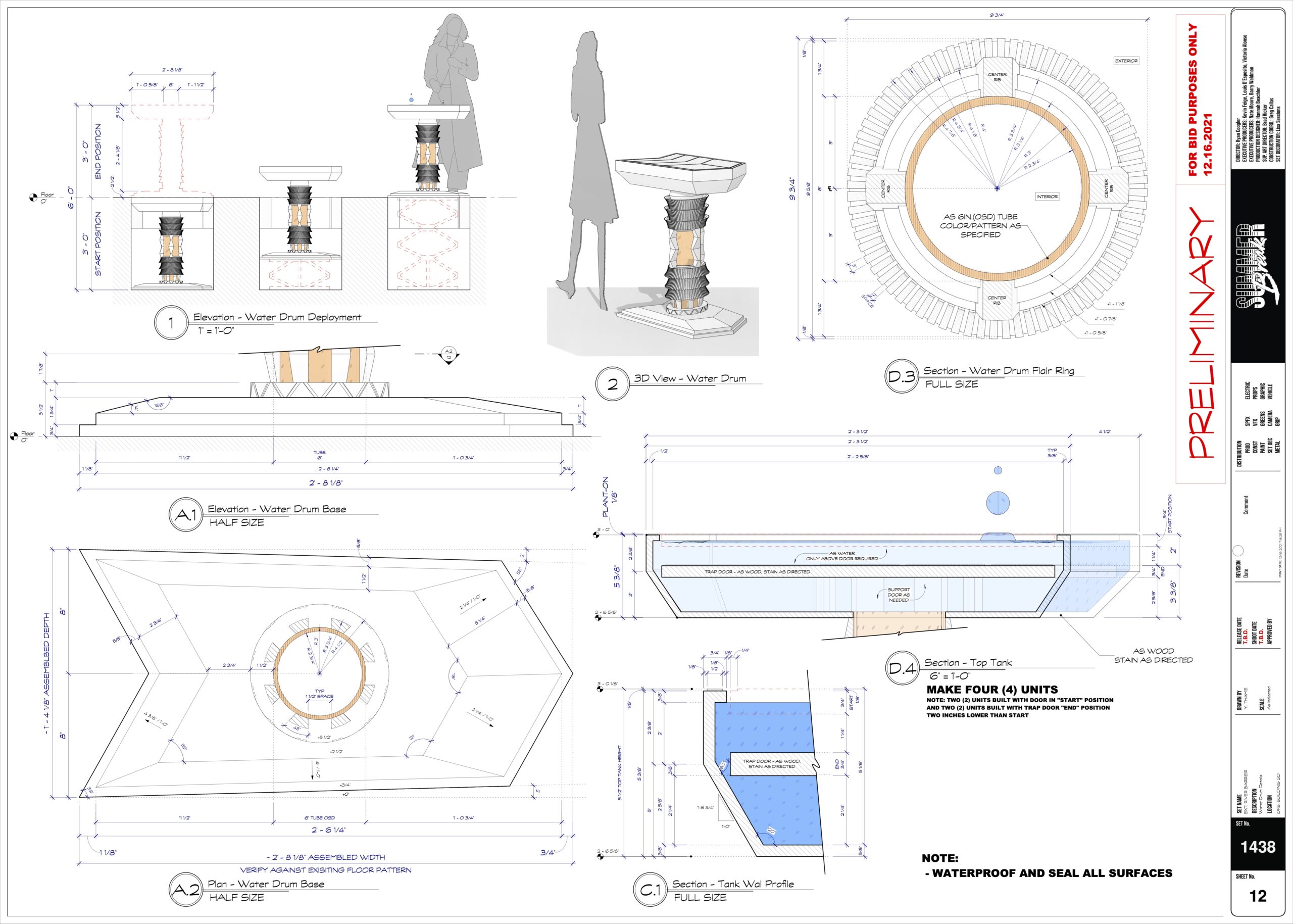

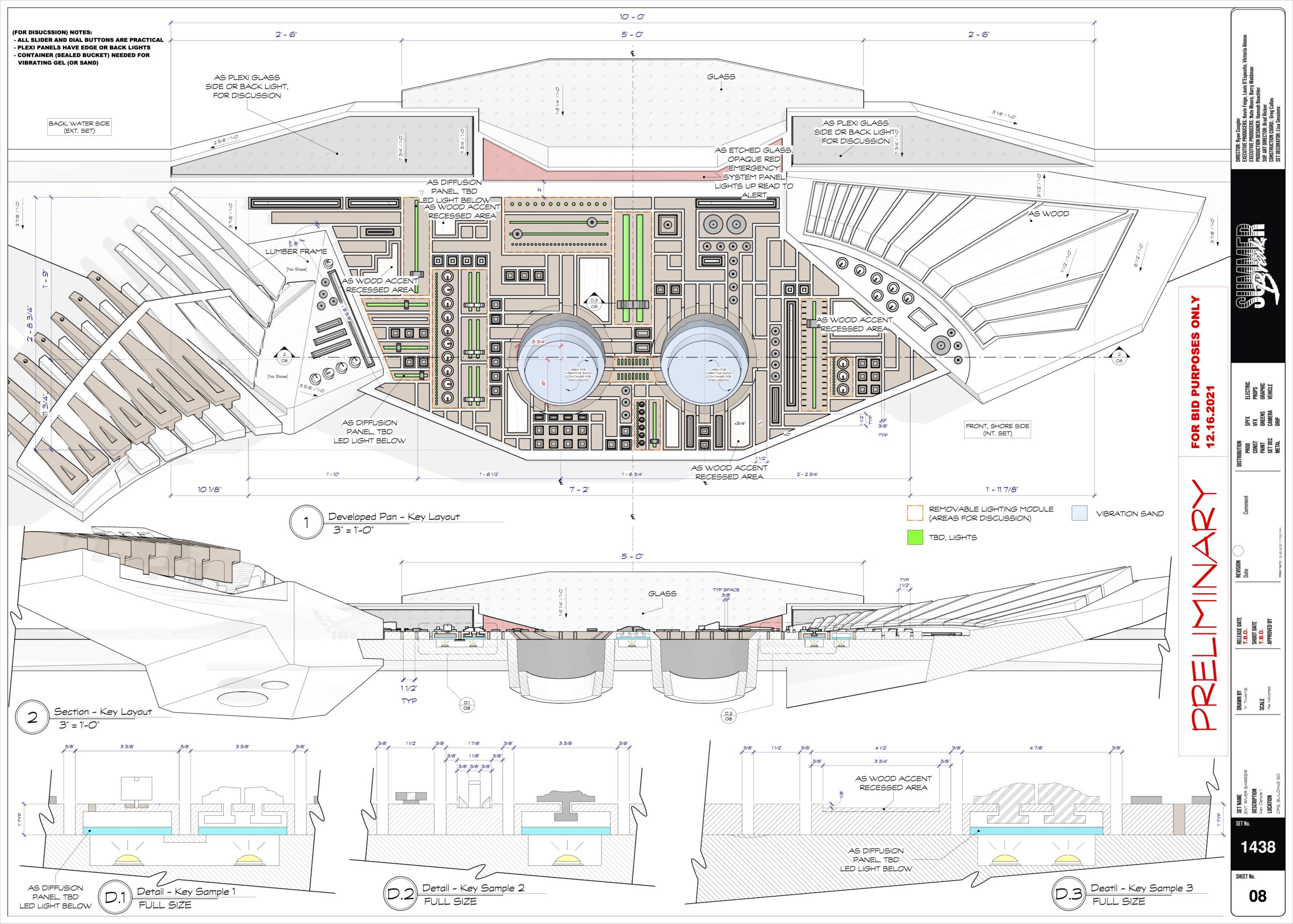


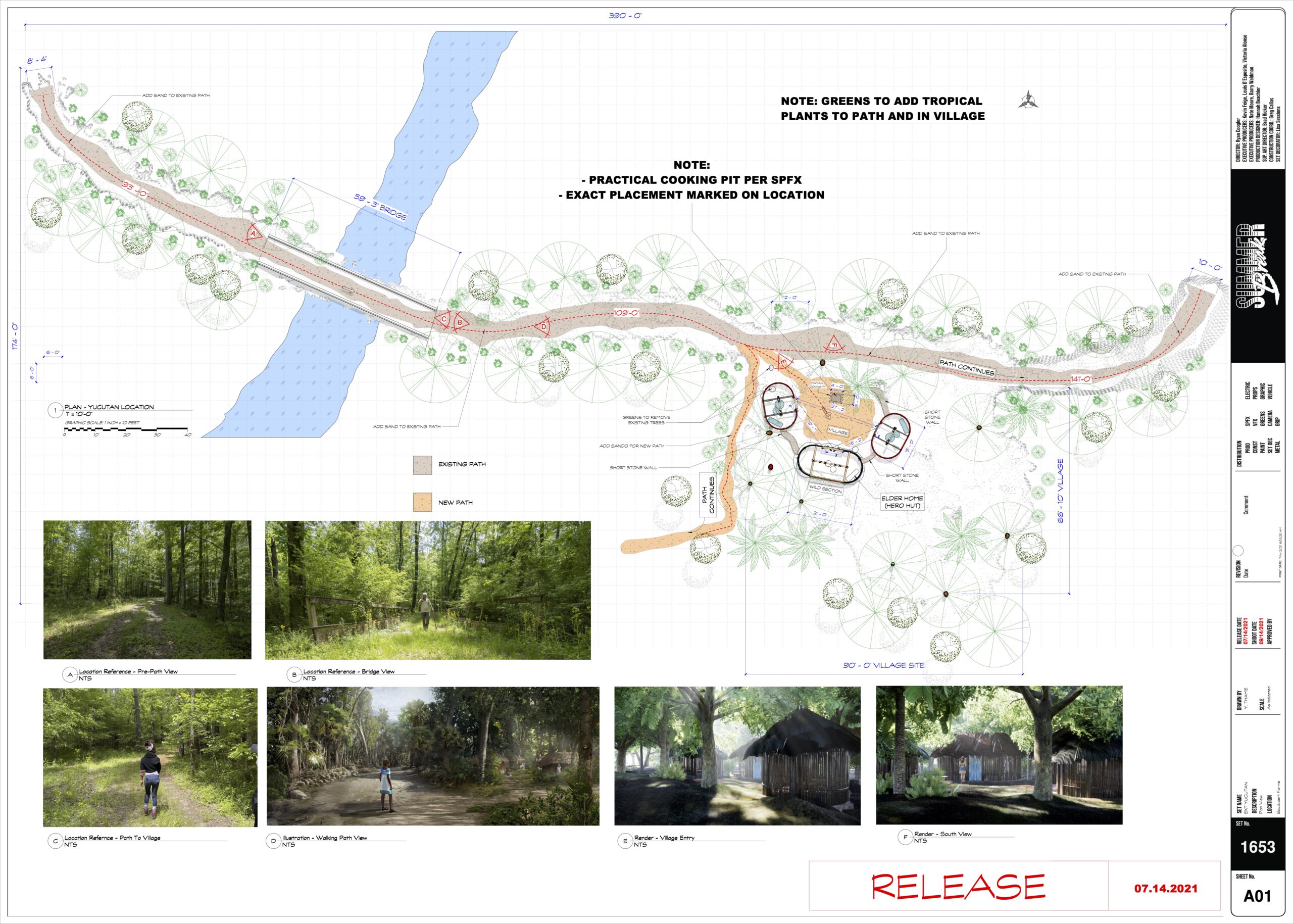
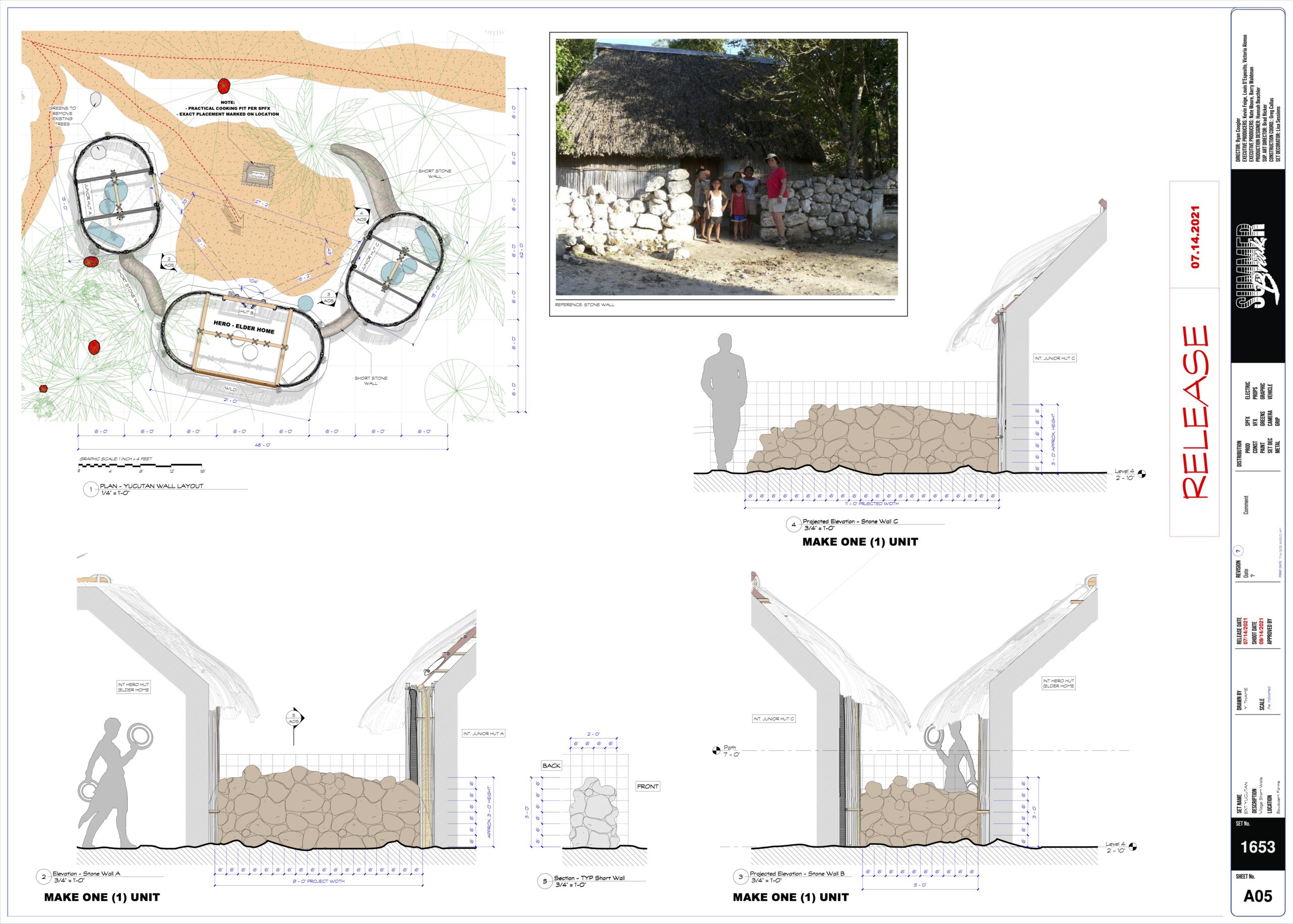


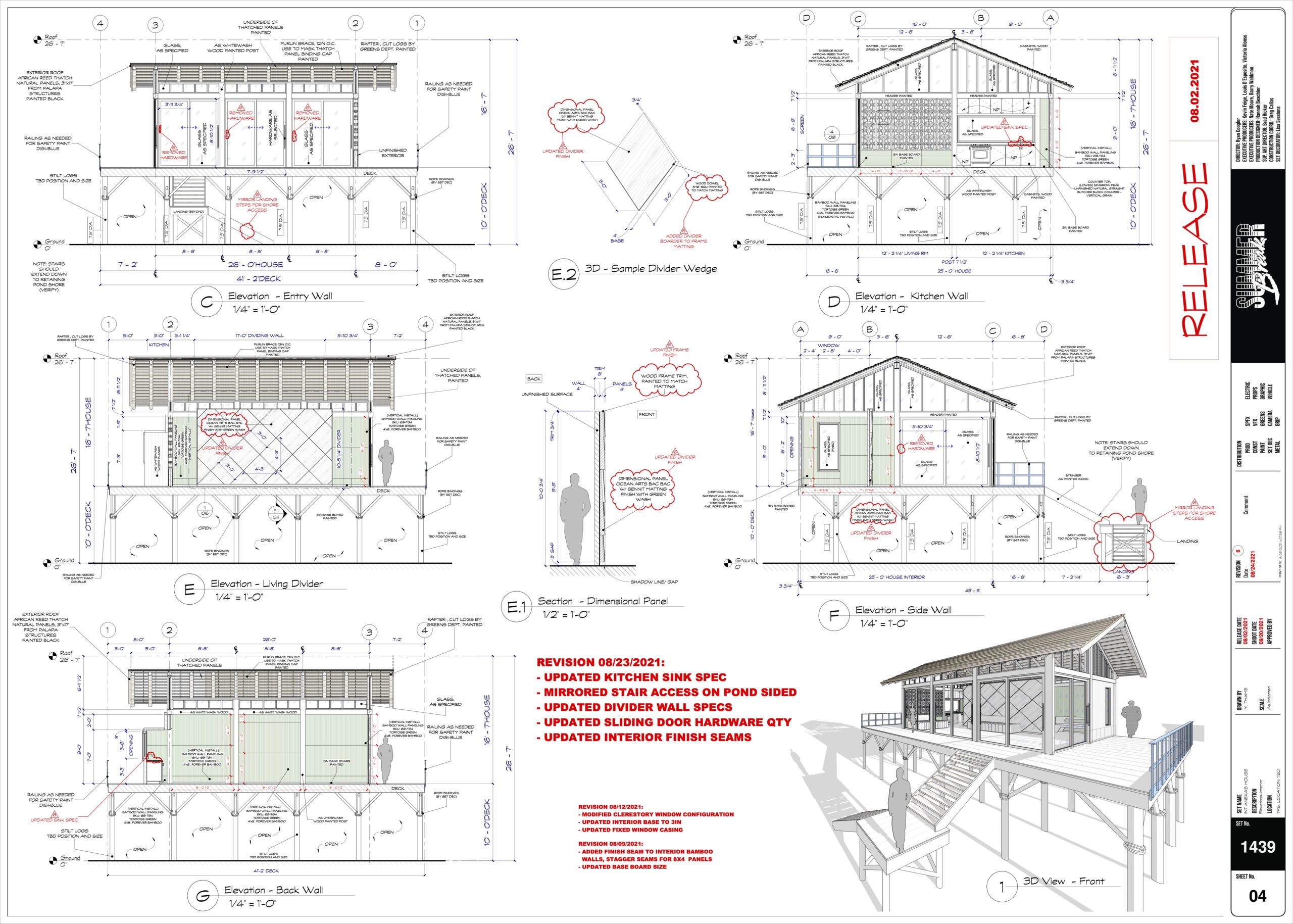
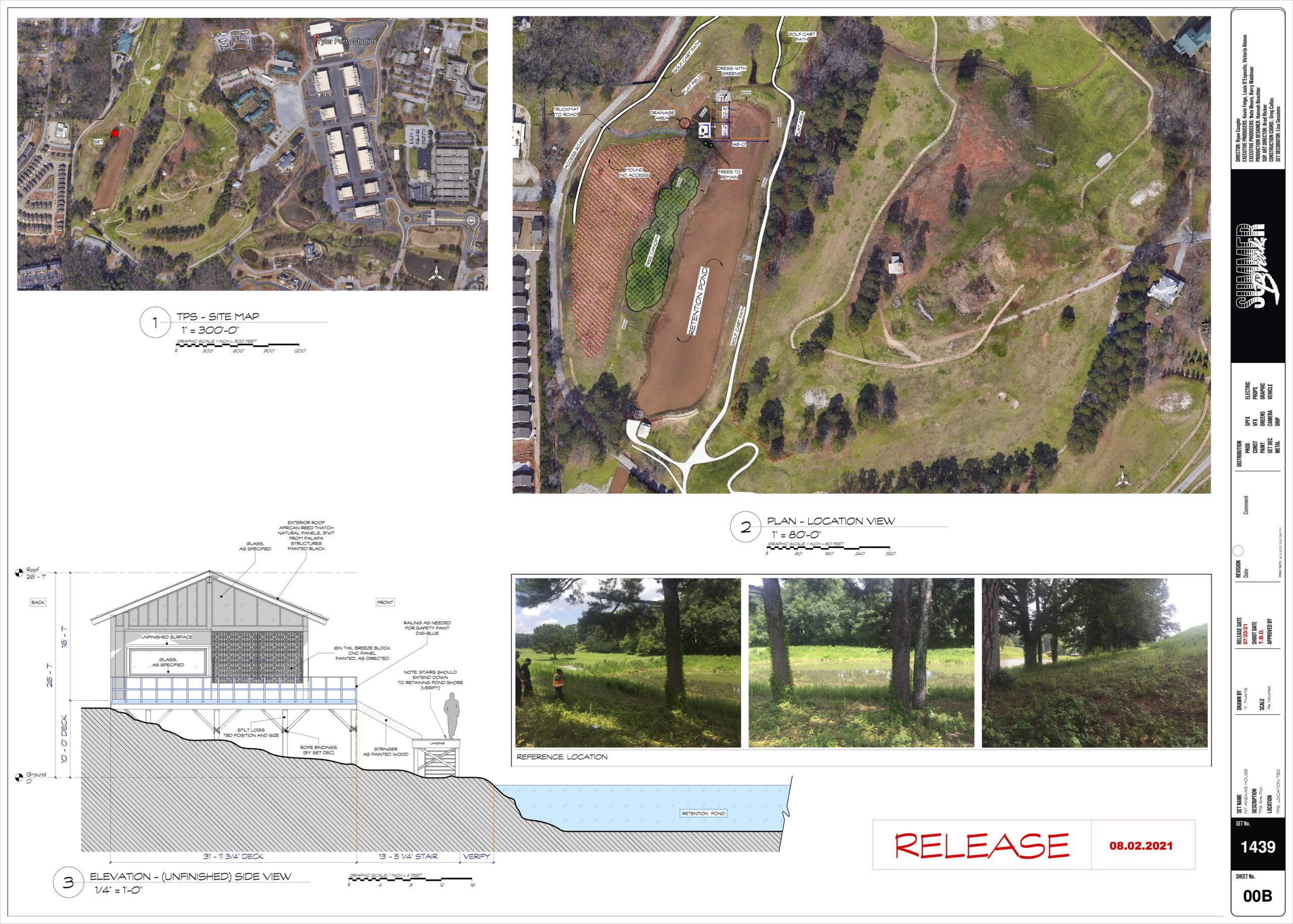
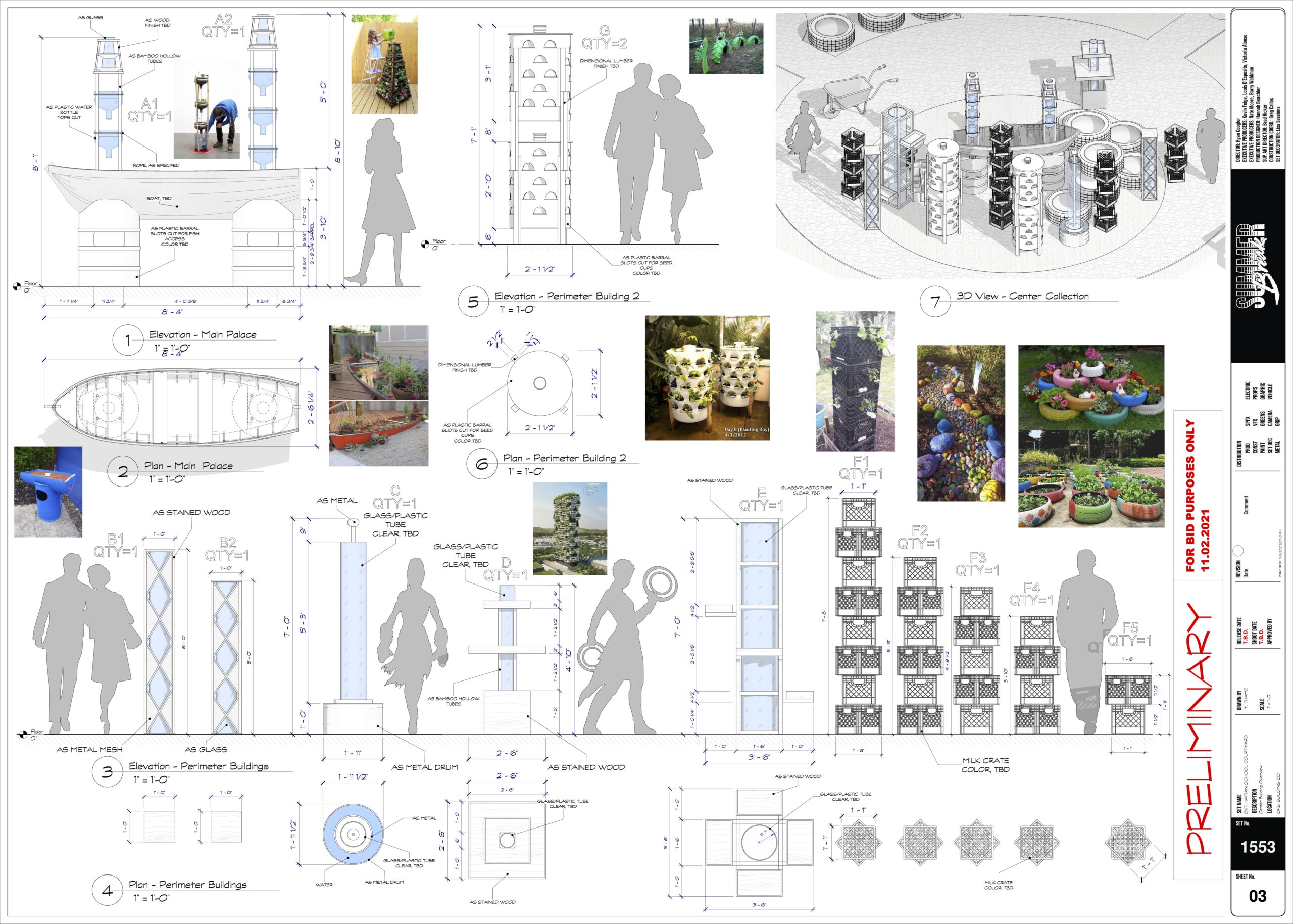
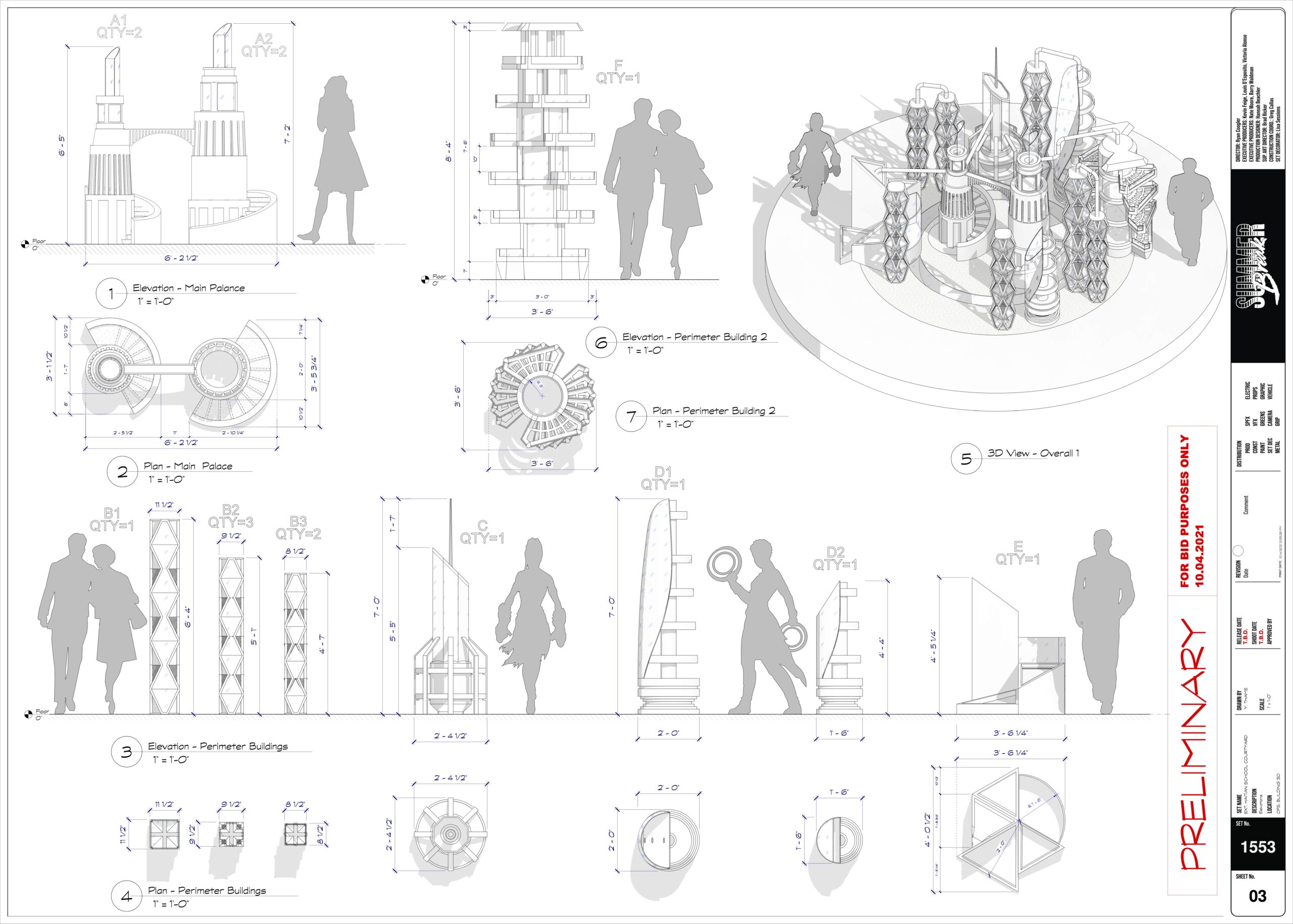

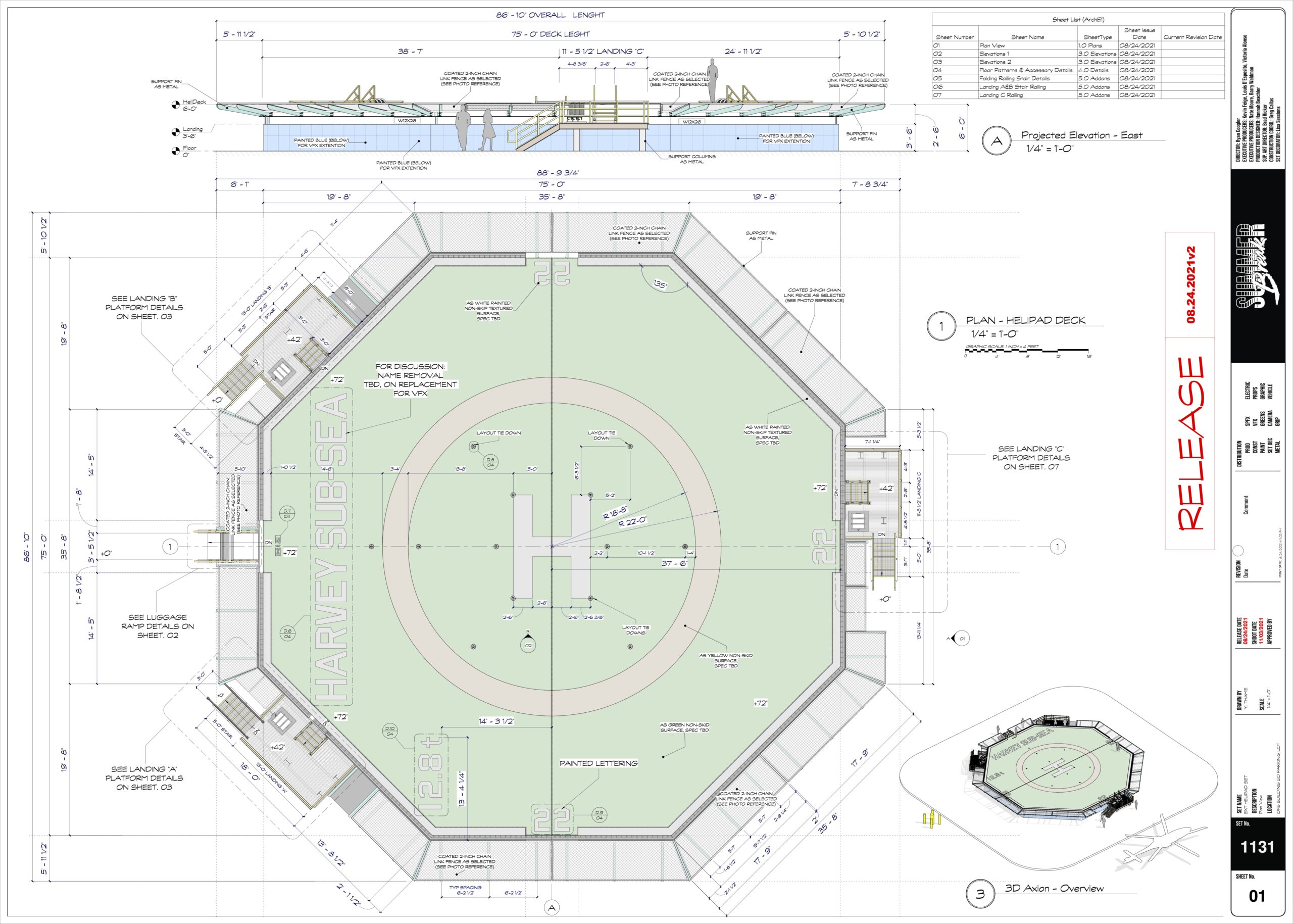

All studio-owned imagery displayed with full production house credit for professional portfolio purposes. Set drawings and technical documents are original work by Yolande Thame.
Impact
The Talokan sequences are now studied as an example of how to build a non-Western civilization for speculative fiction with genuine cultural integrity. The underwater city doesn’t read as fantasy — it reads as a place that could have existed, with its own logic, its own history, its own relationship to the physical world.
The film grossed $859M worldwide, received five Academy Award nominations (winning Best Costume Design), and marked a defining moment in mainstream cinema’s engagement with non-Western cultures. Angela Bassett received the first-ever Oscar nomination for a performance in a Marvel film.
For me personally, working on Wakanda Forever was a demonstration that cultural rigor and production efficiency are not in conflict — and that a Marvel film can be both a global blockbuster and a respectful act of representation, if the right people are in the room and given the space to do the work properly.
Next step